












24-Day Antarctica, South Georgia & Falklands Holiday: The Ultimate Polar Expedition
Our 24-day Antarctica Basecamp Expedition is the definitive polar masterpiece, designed specifically for active travellers who want to explore the Southern Ocean in its entirety. Moving far beyond a standard peninsula cruise, this immersive 24-day itinerary transforms your vessel into a high-performance floating base camp. It grants you unprecedented access to three distinct polar ecosystems: the windswept wildlife havens of the Falkland Islands, the jaw-dropping king penguin colonies of South Georgia, and the frozen wilderness of the Antarctic Peninsula and South Shetland Islands.
Setting sail from Ushuaia, this active journey goes beyond passive sightseeing. By establishing the ship as a stationary hub in key sectors, you can choose to engage directly with the environment through a myriad of fully included outdoor pursuits. Under the strict supervision of elite international mountain guides, kayak masters, and polar field naturalists, you will experience the raw grandeur of the polar regions at an exhilarating, unhurried pace.
Trip Overview & Included Adventure Activities
Unlike standard commercial lines where outdoor activities incur hefty surcharge fees, our 24-day Basecamp voyage operates on a fully inclusive framework. The ship is fully stocked with specialized equipment to turn every guest into a true explorer.
Featured Vessel: The Hondius (or Plancius)
For this highly technical, long-range Basecamp itinerary, we utilize Oceanwide Expeditions’ custom-built vessels, specifically the Hondius (or her equally rugged sister ship, the Plancius). Carrying a maximum of 170 passengers, these vessels are uniquely engineered to act as high-performance, flexible field stations for intensive multi-activity operations across thousands of nautical miles.
Key Features of Your Activity Basecamp:
-
Custom-Engineered Activity Platforms: Unlike traditional luxury cruise liners, these ships are designed specifically to deploy massive amounts of equipment quickly. They feature spacious, dedicated mudrooms, rapid-launch stern gates for a full fleet of Zodiacs, and custom storage setups that allow kayaking, mountaineering, and camping gear to be readied simultaneously.
-
Highest Polar Ice Class (PC6): The Hondius is built to the highest structural standards for passenger vessels navigating polar waters. Its reinforced hull cuts through thick pack ice effortlessly, allowing the captain to access remote, sheltered bays in the South Orkneys and the Peninsula that standard ships simply cannot reach.
-
Wild Polar Camping Operations: The ship carries specialized, heavy-duty polar bivouac gear. On designated nights when weather permits, the crew transfers brave campers to the shore for a night of wild camping, strictly managed under zero-impact protocols to ensure no trace is left behind.
-
Contemporary Comfort with an Eco-Focus: While highly functional, the Hondius provides a warm, modern sanctuary. It features bright, stylish staterooms, a spacious observation lounge with wrap-around glass, and fine-dining options. It is also highly eco-efficient, utilizing advanced LED lighting, biodegradable materials, and eco-friendly hull paints to minimize its footprint on the delicate marine systems it explores.
Conscious Tourism Mandate: All activities are conducted in strict accordance with IAATO (International Association of Antarctica Tour Operators) protocols. We maintain a zero-single-use-plastics policy on board and ensure that no foreign organic material is introduced to the fragile polar ecosystem.
| Activity | Skill Level Required | Equipment Provided | Highlight Location |
|---|---|---|---|
| Polar Wild Camping | Beginner to Advanced | Sub-zero bivouac bags, mats, & tents | Paradise Bay / Kerr Point |
| Sea Kayaking | Previous experience preferred | Dry suits, paddles, & stable sea kayaks | Wilhelmina Bay |
| Glacial Mountaineering | Moderate fitness required | Ropes, harnesses, ice axes, & crampons | Neko Harbour ridges |
| Snowshoe Hiking | Beginner friendly | Lightweight snowshoes & trekking poles | Cuverville Island |
| Zodiac Coastal Safaris | All levels | Life jackets & insulated waterproof boots | Pleneau Island / Point Wild |
Package Details & Inclusions
Pricing
-
From £15,570 per person (Based on two people sharing a stateroom)
Your Signature Journey Includes:
-
Full-Board Polar Dining: All freshly prepared meals throughout the voyage aboard your expedition vessel, including daily snacks, premium coffees, and artisanal teas.
-
Immersive Shore Excursions: All guided shore landings and deep-wilderness coastal explorations utilizing the ship’s private fleet of rugged Zodiac craft.
-
Elite Expedition Leadership: A comprehensive program of specialist lectures and field guiding led by noted marine biologists, glaciologists, and polar historians.
-
Technical Gear Allocation: Complimentary, professional-grade use of insulated rubber expedition boots and lightweight snowshoes for all shore terrain.
-
Streamlined Polar Logistics: Dedicated luggage transfer from your Ushuaia arrival pick-up point straight to your cabin on the day of boarding, alongside pre-scheduled group transfers from the vessel directly to Ushuaia Airport upon disembarkation.
-
Port & Service Fees: Complete coverage of all miscellaneous service taxes, international port charges, and conservation fees throughout the maritime itinerary.
-
Expert Pre-Departure Curation: Comprehensive, masterfully compiled pre-departure materials and packing guides tailored to your active polar voyage.
Day 1 – Fly from the UK to Ushuaia, Argentina
You’ll be met at the Airport by an English-speaking guide, for a private transfer to your hotel hotel.
- Board Includes:
- Breakfast


Read more...
Day 2 – End of the world, start of a journey
Your voyage begins where the world drops off. Ushuaia, Argentina, reputed to be the southernmost city on the planet, is located on the far southern tip of South America. Starting in the afternoon, you embark from this small resort town on Tierra del Fuego, nicknamed “The End of the World,” and sail the mountain-fringed Beagle Channel for the remainder of the evening.
- Board Includes:
- Breakfast
Read more...
Day 3 – The winged life of the westerlies
Several species of albatross follow the vessel into the westerlies, along with storm petrels,
shearwaters, and diving petrels.
- Board Includes:
- Breakfast
- Lunch
- Dinner
Read more...
Day 4 – Finding the Falklands
The Falkland Islands offer an abundance of wildlife that is easily approachable, though
caution is always advised. These islands are largely unknown gems, the site of a 1982 war
between the UK and Argentina. Not only do various species of bird live here, but chances
are great you’ll see both Peale’s dolphins and Commerson’s dolphins in the surrounding
waters.
During this segment of the voyage, you may visit the following sites:
Carcass Island – Despite its name, this island is pleasantly rodent-free and hence bounteous with birdlife and many endemic species. Anything from breeding Magellanic penguins and gentoos to numerous waders and passerine birds (including Cobb’s wrens
and tussock-birds) live here.
Saunders Island – On Saunders Island you can see the black-browed albatross and its sometimes-clumsy landings, along with breeding imperial shags and rockhopper penguins. King penguins, Magellanic penguins, and gentoos are also found here.
- Board Includes:
- Breakfast
- Lunch
- Dinner
Read more...
Day 5 – The seat of Falklands culture
The capital of the Falklands and centre of its culture, Port Stanley has some Victorian-era
charm: colourful houses, well-tended gardens, and English-style pubs are all to be found
here. You can also see several century-old clipper ships nearby, silent witnesses to the
hardships of 19th century sailors. The small but interesting museum is also worth a visit,
covering the early days of settlement up to the Falklands War. Approximately 2,100 people
live in Port Stanley. Admission to the museum is included.
- Board Includes:
- Breakfast
- Lunch
- Dinner
Read more...
Day 6 & 7 – Once more to the sea
En route to South Georgia, you now cross the Antarctic Convergence. The temperature
cools considerably within the space of a few hours, and nutritious water rises to the surface
of the sea due to colliding water columns. This phenomenon attracts a multitude of
seabirds near the ship, including several species of albatross, shearwaters, petrels, prions,
and skuas.
- Board Includes:
- Breakfast
- Lunch
- Dinner
Read more...
Day 8 – 11 South Georgia Journey
Today you arrive at the first South Georgia activity site. Please keep in mind that weather conditions in this area can be challenging, largely dictating the programme. Over the next several days, you have a chance to visit the following sites:
Prion Island – This location is closed during the early part of the wandering albatross breeding season (November 20 – January 7). From January on, the breeding adults have found their partners and are sitting on eggs or nursing their chicks. Enjoy witnessing the gentle nature of these animals, which possess the largest wingspan of any bird in the world.
Fortuna Bay – A beautiful outwash plain from Fortuna Glacier is home to a large number of king penguins and seals. Here you may also have the chance to follow the final leg of Shackleton’s route to the abandoned whaling village of Stromness. This path cuts across the mountain pass beyond Shackleton’s Waterfall, and as the terrain is partly swampy, be prepared to cross a few small streams.
Salisbury Plain, St. Andrews Bay, Gold Harbour – These sites not only house the three largest king penguin colonies in South Georgia, they’re also three of the world’s largest breeding beaches for Antarctic fur seals. Literally millions breed on South Georgia during December and January. Only during the mid-season do they peak in their breeding cycle.
There will be some young adult Elephant seals as well as this seasons ‘Weaner’s; the young
Elephant Seals that have been left to fend for themselves. Watch your step and stay cool when walking the beaches during this time.
Grytviken – In this abandoned whaling station, king penguins walk the streets and
elephant seals lie around like they own the place – because they basically do. Here you
might be able to see the South Georgia Museum as well as Shackleton’s grave. In the
afternoon of day 10 and depending on the conditions, we will start sailing southwards in
the direction of the South Orkney Islands.
- Board Includes:
- Breakfast
- Lunch
- Dinner
Read more...
Days 12 – Southward bound
There may be sea ice on this route, and at the edge of the ice some south polar skuas and snow
petrels could join the other seabirds trailing the vessel south
- Board Includes:
- Breakfast
- Lunch
- Dinner
Read more...
Day 13 – The scenic vistas of South Orkney
Depending on the conditions, you might visit Orcadas Base, an Argentine scientific station
on Laurie Island in the South Orkney archipelago. The personnel here will happily show
you their facility, where you can enjoy expansive views of the surrounding glaciers. If a
visit isn’t possible, you may instead land in Coronation Island’s Shingle Cove.
- Board Includes:
- Breakfast
- Lunch
- Dinner
Read more...
Day 14 – Legendary Elephant Island
- Board Includes:
- Breakfast
- Lunch
- Dinner
Read more...
Day 15 – Along the Antarctic Peninsula
- Board Includes:
- Breakfast
- Lunch
- Dinner
Read more...
Day 16: Scenes of South Shetland
The volcanic islands of the South Shetlands are windswept and often cloaked in mist, but they do offer subtle pleasures: There’s a wide variety of flora (mosses, lichens, flowering grasses) and no small amount of fauna (gentoo penguins, chinstrap penguins, southern giant petrels).
In Deception Island, the ship plunges through Neptune’s Bellows and into the flooded caldera. Here you find an abandoned whaling station, and thousands of cape petrels – along with kelp gulls, brown and south polar skuas, and Antarctic terns. A good hike is a possibility in this fascinating and desolate volcanic landscape
- Board Includes:
- Breakfast
- Lunch
- Dinner
Read more...
Day 17 – 21: Onward into Antarctica
Gray stone peaks sketched with snow, towers of broken blue-white ice, and unique polar wildlife below and above welcome you into the otherworldly expanse of Antarctica. You enter the area around Gerlache Strait, venturing into one of the most beautiful settings Antarctica has to offer.
Sites you may visit here include:
Neko Harbour – An epic landscape of mammoth glaciers and endless wind-carved snow, Neko Harbour offers opportunities for a Zodiac cruise and landing that afford the closest views of the surrounding alpine peaks.
Paradise Bay – You may be able to take a Zodiac cruise in these sprawling, ice-flecked waters, where there’s a good chance you’ll encounter humpback and minke whales.The aim is then to head south. If conditions allow, sites you can visit ‘over’ the polar circle include:
Crystal Sound – Your journey takes you south along the Argentine Islands to this ice-packed body of water, and from here across the Polar Circle in the morning.
Detaille Island – You may make a landing at an abandoned British research station here, taking in the island’s lofty mountains and imposing glaciers.
Pourquoi Pas Island – You might circumnavigate this island, named after the ship of the famous French explorer Jean-Baptiste Charcot. This location is known for its tight fjords and lofty, glacier-crowded mountains.
Horseshoe Island – This is the location of the former British Base Y, a remnant of the 1950s that is now unmanned though still equipped with almost all the technology it had while in service.
As with all of our Antarctic trips, conditions on the Drake Passage determine the exact time of departure.
- Board Includes:
- Breakfast
Read more...
Day 22 – 23: Familiar seas, familiar friends
Your return voyage is far from lonely. While crossing the Drake, you’re again greeted by the vast array of seabirds remembered from the passage south. But they seem a little more familiar to you now, and you to them.
- Board Includes:
- Breakfast
Read more...
Day 24: There and back again
Every adventure, no matter how grand, must eventually come to an end. It’s now time to disembark in Ushuaia, but with memories that will accompany you wherever your next adventure lies.
- Board Includes:
- Breakfast
Show More
24-day Antarctica Basecamp Expedition
For this definitive 24-day Antarctica Basecamp Expedition, we partner with Oceanwide Expeditions and primarily utilize their flagship vessel, the Hondius, or her equally rugged sister ship, the Plancius.
These specific ships are chosen because they are uniquely engineered from the keel up to handle the demanding logistics of a multi-activity, long-range voyage across the Southern Ocean.
Here is a breakdown of the two vessels used for this itinerary:
1. Hondius: The Modern Activity Hub
The Hondius is the world’s first registered “Polar Class 6” passenger vessel, representing the absolute cutting edge in polar maritime engineering.
-
Rapid-Deployment Design: Built specifically for the “Basecamp” concept, it features a radical stern-gate layout and dual gangways. This allows the crew to launch a full fleet of Zodiacs, kayaks, and mountaineering teams simultaneously without passenger queues.
-
Advanced Stabilisation: It is highly stable and equipped with adjustable pitch propellers and innovative eco-propulsion engines that drastically reduce underwater noise, allowing the ship to glide quietly past marine wildlife.
-
Onboard Vibe: It strikes the perfect balance for Earth Trip clients—offering contemporary, bright, Scandinavian-styled deluxe staterooms and an expansive observation lounge without the stiff, formal atmosphere of traditional luxury cruise liners.
2. Plancius: The Ultimate Rugged Explorer
Originally built as an oceanographic research vessel for the Royal Netherlands Navy, the Plancius was completely rebuilt into a dedicated passenger expedition ship.
-
Ice-Strengthened Heritage: What it lacks in the hyper-modern lines of the Hondius, it makes up for in pure, rugged ice-navigating capability. Its thick steel hull can crunch deep into the pack ice of remote bays, getting you closer to tucked-away landing sites.
-
Intimate Basecamp Atmosphere: Carrying slightly fewer passengers, it operates with an incredibly tight-knit, explorer-focused community feel. The large open deck spaces are ideal for birdwatchers looking out for wandering albatrosses during the open-ocean crossings.
Both ships are fully equipped with dedicated mudrooms, custom gear lockers, and a fleet of heavy-duty Zodiacs, making them the ultimate tools for a 24-day active expedition.
Antarctica 24-Day Basecamp Frequently Asked Questions
Do I need prior experience for mountaineering or kayaking?
For technical mountaineering and snowshoeing, no prior experience is required, though a reasonable level of physical fitness is necessary to climb snowy inclines. For sea kayaking, we recommend having some basic paddling experience, as you will be navigating waters containing brash ice and currents.
How does the overnight polar camping work?
Camping is highly weather-dependent and handled on a lottery or rotational basis. The expedition team provides all technical gear, including windproof bivouac bags, insulated mats, and thermal sleeping bags rated for sub-zero temperatures. In accordance with strict conservation laws, no food, drink (except water), or waste can be left on land. You return to the ship early the following morning for breakfast.
Can I choose to just do standard shore walks instead?
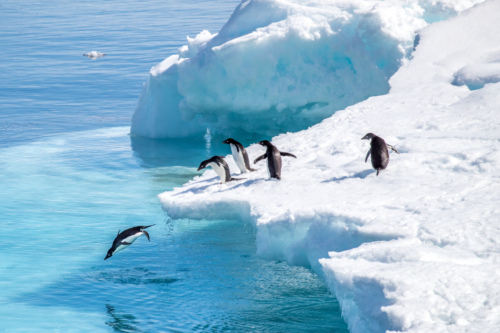
Absolutely. The Basecamp concept is entirely flexible. If you prefer a more relaxed day, you can always choose standard guided shore landings to photograph penguin rookeries or enjoy a scenic Zodiac cruise among the icebergs instead of the high-energy sports.
Unsure Where To Start?
Connect with a specialist to craft your journey.


Our travel specialists are seasoned explorers with deep local insights. Whether it’s uncovering hidden gems or planning immersive cultural experiences, we design trips that go beyond the ordinary. Get in touch today!
Request A Video MeetingSpeak to our Antarctica travel expert today
Aleem Raheem, Co-Founder and Sustainable Travel Expert | Earth Trip
Speak to our Antarctica travel expert today
Aleem Raheem, Co-Founder and Sustainable Travel Expert | Earth Trip
24-day Antarctica Basecamp Expedition
For this definitive 24-day Antarctica Basecamp Expedition, we partner with Oceanwide Expeditions and primarily utilize their flagship vessel, the Hondius, or her equally rugged sister ship, the Plancius.
These specific ships are chosen because they are uniquely engineered from the keel up to handle the demanding logistics of a multi-activity, long-range voyage across the Southern Ocean.
Here is a breakdown of the two vessels used for this itinerary:
1. Hondius: The Modern Activity Hub
The Hondius is the world’s first registered “Polar Class 6” passenger vessel, representing the absolute cutting edge in polar maritime engineering.
-
Rapid-Deployment Design: Built specifically for the “Basecamp” concept, it features a radical stern-gate layout and dual gangways. This allows the crew to launch a full fleet of Zodiacs, kayaks, and mountaineering teams simultaneously without passenger queues.
-
Advanced Stabilisation: It is highly stable and equipped with adjustable pitch propellers and innovative eco-propulsion engines that drastically reduce underwater noise, allowing the ship to glide quietly past marine wildlife.
-
Onboard Vibe: It strikes the perfect balance for Earth Trip clients—offering contemporary, bright, Scandinavian-styled deluxe staterooms and an expansive observation lounge without the stiff, formal atmosphere of traditional luxury cruise liners.
2. Plancius: The Ultimate Rugged Explorer
Originally built as an oceanographic research vessel for the Royal Netherlands Navy, the Plancius was completely rebuilt into a dedicated passenger expedition ship.
-
Ice-Strengthened Heritage: What it lacks in the hyper-modern lines of the Hondius, it makes up for in pure, rugged ice-navigating capability. Its thick steel hull can crunch deep into the pack ice of remote bays, getting you closer to tucked-away landing sites.
-
Intimate Basecamp Atmosphere: Carrying slightly fewer passengers, it operates with an incredibly tight-knit, explorer-focused community feel. The large open deck spaces are ideal for birdwatchers looking out for wandering albatrosses during the open-ocean crossings.
Both ships are fully equipped with dedicated mudrooms, custom gear lockers, and a fleet of heavy-duty Zodiacs, making them the ultimate tools for a 24-day active expedition.
Antarctica 24-Day Basecamp Frequently Asked Questions
Do I need prior experience for mountaineering or kayaking?
For technical mountaineering and snowshoeing, no prior experience is required, though a reasonable level of physical fitness is necessary to climb snowy inclines. For sea kayaking, we recommend having some basic paddling experience, as you will be navigating waters containing brash ice and currents.
How does the overnight polar camping work?
Camping is highly weather-dependent and handled on a lottery or rotational basis. The expedition team provides all technical gear, including windproof bivouac bags, insulated mats, and thermal sleeping bags rated for sub-zero temperatures. In accordance with strict conservation laws, no food, drink (except water), or waste can be left on land. You return to the ship early the following morning for breakfast.
Can I choose to just do standard shore walks instead?
Absolutely. The Basecamp concept is entirely flexible. If you prefer a more relaxed day, you can always choose standard guided shore landings to photograph penguin rookeries or enjoy a scenic Zodiac cruise among the icebergs instead of the high-energy sports.
 Antarctica Grand Cruise Holiday 2027 & 2028
-
© 2026 Earth Trip