












Let us take you to the most spectacular natural wonders of Western Madagascar
Curated by our Global Travel Specialist, Aleem Raheem, this 16-day Western Madagascar Adventure is the result of over two decades of on-the-ground exploration. Unlike broader island circuits, this tour focuses intensely on the unique biodiversity and ‘otherworldly’ terrain of the West. Having personally vetted the river crossings to the Tsingy and every lodge along the Morondava coast, Aleem has refined this route to ensure you experience the ‘Red Island’ in its most authentic form. Whether you are navigating the Great Tsingy’s stone needles or tracking the Giant Jumping Rat in Kirindy, this is a deep-entry expedition built on genuine expertise.


Verified by our Global Expert: “I have personally traveled the rugged tracks of Western Madagascar to ensure this route balances the raw beauty of the Tsingy with the best available comforts. This is one of the most rewarding wilderness journeys I have ever vetted.” — Aleem Raheem, Director of Earth Trip
The Best Time To Visit
April-November
The best time to visit Madagascar is from April to November, during the dry season, when wildlife viewing and outdoor activities are at their peak. June to September is optimal for photography at Baobab Alley due to the clear skies and low humidity.
Enquire TodayRegions You’ll Visit
View mapItinerary Highlights
-
The Tsingy de Bemaraha: A UNESCO World Heritage site featuring a “forest” of sharp limestone needles. You can explore the Great Tsingy via hiking routes tailored to your fitness level.
-
Avenue of the Baobabs: Visit these ancient, 1,000-year-old trees, especially during twilight for photography.
-
River Expeditions: A barge cruise along the Tsiribihina River and a dugout canoe (pirogue) trip through the Manambolo River gorge.
-
Wildlife Tracking: Look for the elusive Fossa, the Giant Jumping Rat, and various lemur species (including the “dancing” Verreaux’s Sifaka) in the Kirindy Reserve and Kirindy Mitea National Park.
-
Coastal Relaxation: The journey includes time at the remote fisherman village of Belo Sur Mer, known for its white sand beaches and traditional boat building.
Practical Details
-
Price: From £4,600 per person (based on two people sharing).
-
Transport: Private A/C 4×4 vehicles (like Toyota Land Cruisers) with a chauffeur-guide are used to navigate the rugged western terrain.
-
Best Time to Go: The dry season from April to November is recommended for peak wildlife viewing and accessible roads.
-
Accommodation: A mix of simple and mid-range hotels, including camping on sandbanks during the river cruise portion.
Route Overview
-
Antananarivo: Arrival and capital exploration.
-
Miandrivazo & Tsiribihina River: Start of the river cruise and camping.
-
Bekopaka: The gateway to the Tsingy de Bemaraha.
-
Kirindy Forest: Wildlife walks to see nocturnal and endemic species.
-
Morondava: The famous Baobab Avenue.
-
Belo Sur Mer: Beach time and Kirindy Mitea National Park.
-
Antsirabe: A return to the highlands to see the “Malagasy Vichy” before flying home.
Earth Trip Difference: Every lodge, barge, and 4×4 route on this itinerary has been personally inspected by our team to ensure it meets our standards for safety, comfort, and authenticity.
Day 1 – Fly to Antananarivo
Your adventure to Madagascar starts here, you will be flying to Antananarivo, the capital city.
Show More
Day 2 – Arrival → Antananarivo
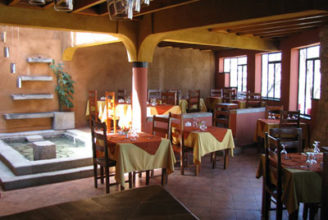
‘’Manao ahoana’’ & ‘’Salama’’ Welcome to tropical paradise. You will be welcomed & greeted by your guide or representative on arrival at Antananarivo Ivato International Airport. You will be transferred to your hotel in Antananarivo. The travel time will be approximately 45 minutes to 1 hour depending on the road traffic.

- Board Includes:
- Breakfast

- Dinner

See more
Day 3 – Antananarivo → Miandrivazo
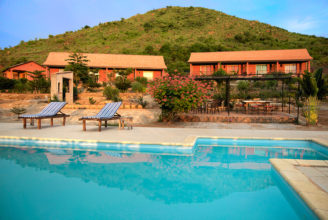
After breakfast you will take a long journey to Miandrivazo. Travel time approximately 7-8 hours. En-route you will visit emerald green Lake Tritriva, one of the two volcanic lakes with legendary tales. The water level drop in the rainy season and rise in the dry season debris from the lake can found down in a valley below, supporting a theory of existing underground channels. Lake Tritriva is situated near the village of Betafo. It’s typical highland village with red houses with red tiled roofs.
Rest of the day at leisure.
- Board Includes:
- Breakfast
- Dinner
See more
Day 4 – Miandrivazo → Begidro
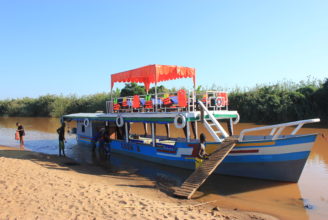
In the morning at 07:30am you will be transferred to your barge, about an hour. You will be welcomed by the crew. You will cruise along the Tsiribihina River passing beautiful landscape and spotting wildlife and birds including herons, wild ducks, parrots, raptors, kingfishers, chameleons, insects and butterflies. You will have lunch on board. Stop at the Anosin’ampela waterfall, a natural permanent pool surrounded by lush vegetation, for a swim before continuing to the village of Begidro. You will visit the Village school. You will stop in one of the sand bank island for the overnight camp and dinner.
- Board Includes:
- Breakfast
- Lunch
- Dinner
See more
Day 5 – Begidro → Berevo
After breakfast you will continue the cruise along the way watch out for flora and fauna. Around midday you will reach the heart of Tsiribihina, here you can see the local villagers use the river for the daily transportation of local products in shapes of boats. You will stop near local village to see the local life and have you lunch, afterwards you will continue your cruise to the Baobab Forest and camp for the night in the sand bank opposite the baobab forest.
Evening enjoy camp fire and local music and dance performed by the local village.
- Board Includes:
- Breakfast
- Lunch
- Dinner
See more
Day 6 – Berevo → Belo Tsiribihina → Bekopaka
Last day of your cruise to Belo Tsiribihina, you will be able to see the changing landscape as well as baobab trees. You will arrive in Belo Tsiribihina just after lunch.
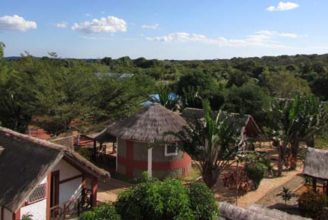
After lunch in the boat you will continue your journey by road to Bekopaka crossing Manambolo River. Enjoy best of off road 4×4 driving, travel time 4-4:30 hours.
In the evening you will meet your guide for the briefing for Tsingy. So you can choose the best suitable for your fit route to hike Tsingy.
- Board Includes:
- Breakfast
- Lunch
- Dinner
See more
Day 7 – Tsingy de Bemaraha
After early breakfast you will be trekking the Tsingy Bemaraha National Park or Grand Tsingy. It is listed as UNESCO World Heritage Site. This is one of the most spectacular natural landscapes in the world. An extensive area of limestone massif has been eroded into impressive pinnacles Karst. Hike through the Great Tsingy, a UNESCO World Heritage site consisting of ancient coral reefs eroded into dramatic limestone needles. Our guides help you choose a route that matches your fitness level. The undisturbed forests, lakes and mangrove swamps are the habitat for rare and endangered lemurs.

There are several circuits to choose from. Prior to trekking your guide will consult you, so you can choose the best circuit that meets your expectation and fitness. Please let you guide know if you are claustrophobic or if you are not comfortable with heights. Tsingy Bemaraha is a treasure trove for nature lovers with high rate of endemism and diversity. The scientists estimate that the general endemism of this park is 86.7% and the ecoregional one is 47%. There are 11 species of lemurs including Deken’s Shifakas, red-fronted brown lemur, Cleese’s wooly lemur and more, five families of Bats, 103 species of birds. The index of the reptiles and amphibians is as large as Bemaraha possesses 34 species that are all endemic. These are just a first taste of your discoveries.
In the afternoon, you visit the Petit / Small Tsingy: this circuit of 2 hours of duration passes through a labyrinth of limestone and two view points over the impressive pinnacles. There are some good chances to spot the Decken’s sifaka and red-fronted brown lemurs.
- Board Includes:
- Breakfast
- Lunch
- Dinner
See more
Day 8 – Manambolo River & Night walk at Kirindy Reserve
Early morning, take a pirogue trip on the Manambolo River gorge. This river marks the entry way to the Tsingy. Crossing of the Manombolo River by dugout canoe showcases array of landscapes, gorges and canyons, we will visit the caves. You can look out for the fish eagles, waterfowl, Humblot’s herons and purple herons.
In the morning you will travel to Kirindy Reserve and travel time 6 hours. Kirindy is situated 50 km northeast of the town of Morondava, is a privately managed forest by a Swiss company dedicated to a selective and sustainable logging (Centre de Formation Professionelle Forestière). It comprises one of the most outstanding and threatened wildlife habitats in Madagascar: the dry deciduous forest, whose extension has been reduced to 3 per cent of their original extent. Dominated by majestic baobab trees and a forest canopy of even 14 m altitude, this protected area is the only place where the Malagasy Giant Jumping Rat occurs. This animal can hop like a miniature kangaroo, but is also seen walking on all four limbs. It is also a sanctuary for the world’s smallest known primate, the Madame Berthe’s Mouse Lemur.
Kirindy is the best place in Madagascar to observe Fossas, especially during the mating time between September and December. It also home to seven species of lemur. The most common are the common brown lemurs and the Verreaux’s sifakas. The remaining species are nocturnal: the rare Coquerel’s giant mouse lemur and pygmy mouse-lemur, fork-crowned lemur, Gray mouse lemur, western fat-tailed dwarf lemur and red-tailed sportive lemur. Several bats, tenrecs, mongooses and rodents complete the mammal population. 40 birds, 50 reptile and 15 amphibian species are also found in this magnificent forest.
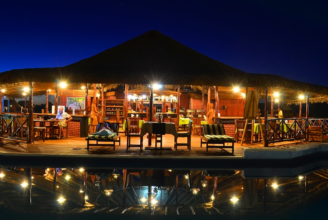
After arriving to Kirindy you will do a night walk around the reserve to observe the wildlife as they more active in the dawn and dusk. Also you will take a walk spot the nocturnal wildlife around 6pm as it offers the best wildlife spotting experience including Giant jumping rat, lemurs, chameleons and Fossa.
- Board Includes:
- Breakfast
- Dinner
See more
Day 9 – Kirindy → Morondava
In the morning after breakfast you will take short circuit walk for 2-3 hours to spot wildlife inside Kirindy deciduous forest.
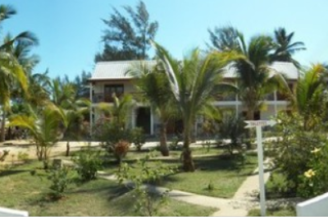
After lunch you will travel to Morondava stopping at Baobab Avenue. You will visit and admire these age old trees in the Alley of Baobabs or Avenue of the Baobabs en-route to Morondava. This is one of the Madagascar’s picture post card images. Baobabs (Grandidiers) are usually solitary trees, standing tall and proud in the midst of empty spaces. Yet in Baobab Alley, they cluster together forming an avenue of columns that border the dirty road. The Baobabs are tall trees with its massive trucks, crooked branches and furry fruit. Baobabs have adapted to the dry and hostile environment. The secret of the baobab’s success in surviving in harsh environments and the reason for its massive trunk is that it has little wood fibre but a large water storage capacity. Each tree can hold up to 300 litres of water, enabling it to live through long periods without rain. The life-cycle of these unique natural oddities is as impressive as their bulk – most live over 500 years.
The best time for photography is in the twilight hours. If time permits, you can admire the sunset on site.
- Board Includes:
- Breakfast
- Dinner
See more
Day 10 – Morondava → Belo sur Mer – Beach
After breakfast you will travel to Belo Sur Mer along the scenic sandy road passing some beautiful baobab trees. Travel time 3:30h-4:30h.
Rest of the day at leisure.
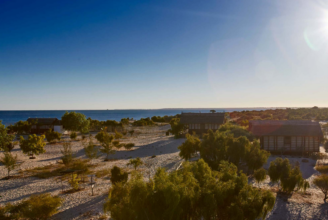
Belo Sur Mer is a beautiful fisherman village with stretches of white powder sandy beaches and turquoise blue waters of Mozambique Channel dotted with palm trees. The peaceful village is known pirogue and wooden boat building. Well worth a walk along the beach to see the village.
- Board Includes:
- Breakfast
- Dinner
See more
Day 10-13 – Belo sur Mer & Kirindy Mitea National Park
In 1 of the days, you will travel to Kirindy Mitea National Park. Travel time 1:30-2 hours with picnic lunch.
Kirindy Mitea National Park is an extensive with diverse wildlife. And it is a remote park and least visited. It is one of the largest deciduous forests with (722 km²). Due to its location, just at the point where the western and southern biotopes converge, visitors can explore tropical, dry deciduous and littoral spiny forest, coastal mangroves, grassy dunes, lakes, amazing beaches and coral reefs, all during the same day.
11 mammal species are found inside the park, including the Verraux sifaka, ring-tailed lemur, red-tailed sportive lemur and pale fork-marked lemur. Amphibians (10 species), reptiles (more than 20) and butterflies (90 species) are quite common.
Apart from that, more than 50 bird species complete the richness of the land fauna. Some of them are very vulnerable such as pink flamingos, lesser flamingo, Bernier´s teal or Malagasy kingfisher.
There are three baobab species, 7 mangrove species as well. The marine area includes 7 small islands.
Rest of the stay at leisure.

- Board Includes:
- Breakfast
- Dinner
See more
Day 14 – Belo sur Mer → Antsirabe
Today you will travel back to the highldands and will stop for the night to explore the charming city of Antsirabe.
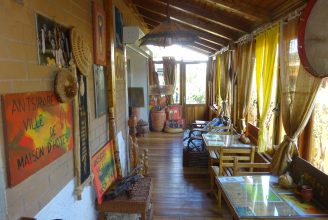
It is one of the most beautiful scenic routes in the central highlands. Antsirabe is the third largest city in Madagascar situated in the high altitude (about 1 500 m). The cool temperatures are in the high altitude the reason why the Norwegian Missionaries chose this city in 1872. Antsirabe is the home of one of the award winning best beers in Madagascar THB (Three Horses Beer). Its name means “where there is salt” honouring the large number of hot springs the town has, a fact that has given the city the nickname of “Malagasy Vichy”. The thermal baths had been long appreciated for their curative effects by the local population when French colonists decided to locate a thermal bath here in the 19th century.
- Board Includes:
- Breakfast
- Dinner
See more
Day 15 – Antsirabe → Antananarivo
Before heading back to Antananarivo, you will have some time to explore Antsirabe city. You will take pousse-pousse rickshaw tour of Antsirabe to discover this interesting city mixed with architectural styles of the colonial and evangelical past. In the European district French cottage-style houses are built next to Scandinavian villas with English style gardens. The tree-lined avenues always give some freshness whenever the sun is too bright.
You will reach Antananarivo for lunch time, afterwards you can have some time to rest or go for souvenirs shopping.
In the evening witness the best sun set with a Sundowner Dinner at Lakonga, Its best place to say cheers to great trip around Madagascar with glass of wine with a beautiful view of Antananarivo. And look back at the great times you had.
- Board Includes:
- Breakfast
- Dinner
See more
Day 16 Fly back home – End of tour
After a final breakfast overlooking the Central Highlands, your private driver will meet you for the transfer to Ivato International Airport (approx. 45–60 mins). Along the way, your driver will be happy to stop at local markets for last-minute Malagasy handicrafts or world-famous vanilla. Upon arrival at the terminal, your driver will assist with your luggage and guide you to the correct check-in desk, ensuring a smooth departure as you carry home memories of the ‘Stone Forest’ and the Baobabs at sunset.
- Board Includes:
- Breakfast
See more
-
Included:
- Private transportation in fully air conditioned vehicle
- Accommodation as per itinerary
- Admission fees to all mention attractions
- English speaking guide as per itinerary
- Meals as mentioned in the itinerary
- Airport meet & greet in all airports
Not Included:
- Gratuities for services and guides
- Expenses on personal nature
- Anything else not listed in the itinerary
- Optional excursions
- Personal & medical insurances
- Flights are not included in the tour price, but we are happy to help you find the best and most suitable flight connections for your trip.
1. What is the best time of year to take the Western Madagascar tour?
Answer: The best time for this specific itinerary is during the dry season, from April to November. Because the Western region (specifically the road to the Tsingy de Bemaraha) involves dirt tracks and river crossings, these areas are often inaccessible during the rainy season (December to March). Traveling in June through September offers the clearest skies for photography at the Avenue of the Baobabs.
2. How physically demanding is the hike in Tsingy de Bemaraha?
Answer: The Great Tsingy hike is considered moderately demanding. While it doesn’t require professional climbing skills, it involves navigating narrow crevices, climbing ladders, and wearing a safety harness for certain steep sections. If you have a severe fear of heights or limited mobility, we can arrange easier walks in the “Petits Tsingy” (Small Tsingy), which offer similar scenery with much less physical exertion.
3. Will I be able to see lemurs on this specific Western route?
Answer: Yes! While the West is famous for its landscapes, you will have excellent lemur-watching opportunities. In Kirindy Forest, you can see the tiny Gray Mouse Lemur (nocturnal) and the Verreaux’s Sifaka (the “dancing lemur”). At Andasibe-Mantadia, you will encounter the Indri-Indri, the largest lemur species, known for its distinctive haunting call.
4. What type of vehicle is used for the Western Madagascar adventure?
Answer: Due to the rugged terrain in Western Madagascar, we use private 4×4 vehicles (usually Toyota Land Cruisers) with experienced driver-guides. The road to the Tsingy and the coastal tracks near Morondava require high-clearance vehicles to ensure safety and comfort. For the river crossings, your 4×4 will be loaded onto local ferries, which is a classic part of the Madagascar adventure experience.
5. Is this tour suitable for solo travelers or families?
Answer: This itinerary is highly flexible and can be fully tailored for both solo travelers and families. Solo travelers enjoy the security of a private driver-guide throughout the trip. For families, we recommend children be at least 8–10 years old for the Tsingy hikes. As this is a private tour, we can adjust the pace, adding more relaxation days in Morondava or shortening the daily driving times to suit your needs.

Unsure Where To Start?
Connect with a specialist to craft your journey.


Our travel specialists are seasoned explorers with deep local insights. Whether it’s uncovering hidden gems or planning immersive cultural experiences, we design trips that go beyond the ordinary. Get in touch today!
Request A Video Meeting Western Madagascar Tour: Baobabs & Tsingy 2027 & 2028