












Grand Tsingy de Bemaraha: Madagascar’s Cathedral of Limestone
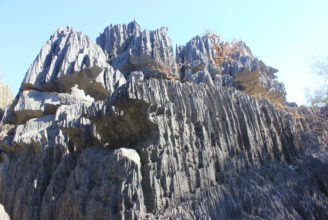
The Grand Tsingy is a UNESCO World Heritage site and arguably Madagascar’s most breathtaking geological wonder. Located in the remote western region, this 152,000-hectare national park is defined by its “Tsingy”—vast forests of jagged limestone needles that reach heights of up to 100 metres. This sharp, vertical landscape was carved over millions of years as groundwater dissolved the limestone plateau, leaving behind a fortress of rock that has protected rare species and ancient Malagasy traditions for centuries.
Experience Highlights
The Via Ferrata & Suspension Bridges Exploring the Grand Tsingy is an adventure like no other. To navigate the razor-sharp terrain, you will use a “Via Ferrata” system involving harnesses, steel cables, and ladders. The highlight of the trek is crossing the iconic hanging bridge, suspended 70 metres above a deep limestone canyon. From this vantage point, you can look out over a seemingly endless sea of grey stone spikes, a view that is both dizzying and magnificent.
The Manambolo Gorge The gateway to the park is the thundering Manambolo River. A traditional pirogue (dugout canoe) trip along the river takes you through massive canyons with vertical walls reaching 100 metres. Along the cliffs, you can observe ancient tombs of the Vazimba—the mysterious first inhabitants of Madagascar—who chose these inaccessible heights as their final resting places.
Caves and Subterranean Labyrinths Beneath the sharp peaks lies a hidden world of cathedral-sized caves. These cool, dark chambers are filled with massive stalactites and stalagmites. During the trek, you will move from the intense heat of the sun-scorched peaks down into these shaded galleries, which often serve as natural air conditioning for the forest’s residents.
Key Species to Spot
The Grand Tsingy is a haven for endemism, with over 85% of its wildlife found nowhere else on the planet:
Primates: Decken’s Sifaka (the “ghost” of the Tsingy with its stark white fur), Red-fronted Brown Lemur, and the rare Cleese’s Woolly Lemur, named after John Cleese.
Birdlife: Over 100 recorded species, including the critically endangered Madagascar Fish Eagle, the Giant Coua, and the Crested Coua.
Reptiles & Amphibians: Masterfully camouflaged Leaf-tailed Geckos, the Madagascar Big-headed Turtle, and the rare Antsingy Leaf Chameleon (Brookesia perarmata), which mimics the jagged rocks.
Flora: Succulent “Bottle Trees” (Pachypodium), drought-resistant baobabs, and wild vanilla orchids that cling to the limestone fissures.
Climate & Best Time to Visit
The park is seasonally restricted due to its remote location and road conditions:
June to October: This is the only window when the park is accessible. The weather is dry and sunny, which is essential for safely navigating the limestone trails and river crossings.
July to September: Peak season, offering the most comfortable temperatures for the strenuous climbs involved in the “Andamozavaky” circuit.
The Earth Trip Experience
At Earth Trip, we recommend the Grand Tsingy for those who crave adventure and unique photography. We provide expert guides who are trained in mountain safety and are masters at spotting well-hidden wildlife among the stones. Given the physical nature of the trek, we often suggest a three-night stay to fully appreciate both the Manambolo Gorge and the high-altitude pinnacles. Standing atop the limestone needles at sunset is a perspective that stays with you forever.
Ready to traverse the sky-high bridges of the Grand Tsingy?
Local Hotels

Unsure Where To Start?
Connect with a specialist to craft your journey.


Each specialist has travelled extensively in the countries they plan. Whether it’s uncovering hidden gems or planning immersive cultural experiences, we design trips that go beyond the ordinary. Get in touch today!
Request A Video MeetingOther Popular Experiences
Speak to our Madagascar travel expert today
Aleem Raheem, Co-Founder and Sustainable Travel Expert | Earth Trip
Speak to our Madagascar travel expert today
Aleem Raheem, Co-Founder and Sustainable Travel Expert | Earth Trip
 Grand Tsingy de Bemaraha: Madagascar’s Cathedral of Limestone