












Explore the Northern Islands of Madagascar
Experience the wonders of Northern Madagascar with our Discovery & Island Hopping Tour. Explore wildlife-rich rain-forests in Amber Mountain, hike the unique limestone karsts of Ankarana Reserve to spot lemurs and reptiles, and unwind on stunning palm-fringed beaches. With a personal English-speaking chauffeur and 4×4, enjoy the freedom to explore Madagascar at your own pace.


Itinerary Highlights
-
Amber Mountain National Park: A volcanic massif home to montane rainforests, waterfalls, and the world’s smallest chameleon (Brookesia micra).
-
Ankarana National Park: A limestone fortress of sharp “Tsingy” ridges, featuring the largest underground cave network in Africa.
-
The Red Tsingy: Fragile and striking red laterite formations created by erosion, best viewed in the late afternoon sun.
-
Andasibe-Mantadia: A visit to the eastern rainforests specifically to see the Indri Indri, Madagascar’s largest lemur.
-
Island Hopping:
-
Nosy Komba: Known as the “Island of Lemurs” for its friendly Black Lemurs.
-
Nosy Tanikely: A protected marine reserve ideal for snorkeling in a “natural aquarium.”
-
Nosy Iranja: Two islands connected by a spectacular white sandbar, also a nesting site for Hawksbill and Green Sea Turtles.
-
Nosy Sakatia: A peaceful retreat with traditional Malagasy charm.
-
-
The Spice Road: A journey through the Sambirano Valley, famous for its organic vanilla, cocoa, and Ylang-Ylang plantations.
Practical Details
-
Price: From £4,790 per person (based on two people sharing).
-
Duration: 17 Days.
-
Transport: Private 4×4 with a chauffeur-guide and domestic flights to bridge the distance between the capital and the far north.
-
Best Time to Visit: The dry season from April to November. For marine life, August–October is best for Humpback whales, and October–December for Whale Sharks.
Route Overview
-
Antananarivo: Arrival and capital exploration.
-
Andasibe: Eastern rainforest treks for Indri lemurs and nocturnal species.
-
Diego Suarez (Antsiranana): Fly to the north for Amber Mountain and the Red Tsingy.
-
Ankarana: Hiking the limestone pinnacles and canyons.
-
Ankify & Sambirano Valley: Traveling through spice plantations to reach the coast.
-
Nosy Komba & Sakatia: Transitioning to the islands for beach relaxation and snorkeling.
-
Nosy Be: Final days of the “Mora Mora” (slowly-slowly) lifestyle before flying back to the capital for departure.
The Best Time To Visit
April to November
The best time to visit Madagascar is from April to November, during the dry season, when wildlife viewing and outdoor activities are at their peak.
Enquire TodayRegions You’ll Visit
View mapExpert Insight from Aleem: “Northern Madagascar is the island’s best-kept secret, but it demands a different pace. I’ve timed this route to ensure you avoid the afternoon trade winds (Varatraza) that can make the sea crossing to Nosy Be choppy. My top tip? When we visit Ankarana, we focus on the ‘Perte de Rivières’—a massive limestone hole where five rivers vanish into underground caves. It’s a geological marvel most tours rush past, but it’s the heartbeat of the northern ecosystem.”
Day 1 – International Departure to Antananarivo: When Should You Start Your Journey to Madagascar?
Today you will start your adventure, you will fly to Antananarivo, Madagascar’s capital city.
We recommend beginning your journey with an evening departure to allow for a smooth connection into Antananarivo’s Ivato International Airport by the following afternoon.
See more about day 1
Day 2 – Arriving in Antananarivo: What is the Best Way to Start Your Tana Adventure?
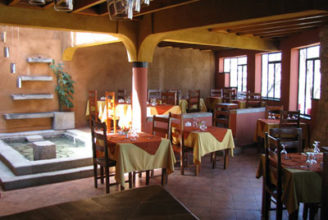
‘’Manao ahoana’’ & ‘’Salama’’ Welcome to tropical paradise. You will be welcomed & greeted by your guide or representative on arrival at Antananarivo Ivato International Airport. You will be transferred to your hotel in Antananarivo. The travel time will be approximately 45 minutes – 1 hour depending on the traffic.
The best way to begin is with a private transfer to your boutique hotel in the historic ‘Upper Town,’ allowing you to acclimate to the island’s unique atmosphere and altitude.
- Board Includes:
- Breakfast

- Dinner

See more about day 2
Day 3 – The Drive to Andasibe: How Do You Reach Madagascar’s Eastern Rainforests?
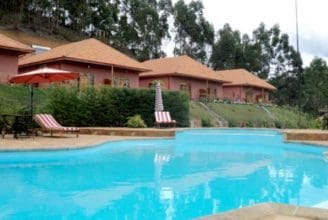
After breakfast you will travel to Andasibe. As the roads wind through the hairpin bends and turns you have opportunities to observe the daily activities of remote villages along this road. You will be passing terrace rice fields and bustling road side stalls with all the tropical fruits. You reach the eastern rainforests via a scenic 4-hour drive along the RN2 highway, transitioning from the high central plateaus into the lush, humid corridors of the Andasibe-Mantadia region.
In the evening around 6pm you will be guided through the Analamazaotra Park on a Night Walk to spot the nocturnal animals including the ‘Goodman Mouse lemur’. Experience the rainforest after dark where nocturnal lemurs, chameleons, geckos, frogs and fireflies come alive. The night walk can take 1½ – 2 hours.
- Board Includes:
- Breakfast
- Dinner
See more about day 3
Day 4 – Exploring Andasibe-Mantadia: Where Can You Hear the Song of the Indri Lemur?
After breakfast you will visit the Andasibe National Park to spot and hear the sounds of the Indri Indri Lemurs. The Indri is the largest living lemur and known as babakotos in the local Malagasy language, which means ‘man of the forest’ or ‘little father’ and unlike other lemurs, only have a short stumpy tail. Indris produce loud territorial calls that can be heard from over 1km away as you enter the park.
The easiest trekking of Indri Circuit with well paved paths can take from 2-3 hours up to 4 kms. Your national park guide will explain to you the choices to meet your expectations.
- Board Includes:
- Breakfast
- Dinner
See more about day 4
Day 5 – Returning to the Capital: What are the Cultural Highlights of Antananarivo?
After breakfast you will travel to the capital of Antananarivo. As the roads wind through the hairpin bends and turns you have opportunities to observe the daily activities of remote villages along this road. You will be passing terrace rice fields and bustling road side stalls with all the tropical fruits. Travel time approximately 3 hours depending on the road traffic. Discover Antananarivo in the afternoon. The cultural highlights of Antananarivo include the royal Rova of Antananarivo palace complex and the vibrant local markets that showcase the city’s unique Merina heritage.
- Board Includes:
- Breakfast
- Dinner
See more about day 5
Day 6 – Flying to Diego Suarez: How Do You Get to Madagascar’s Far North?
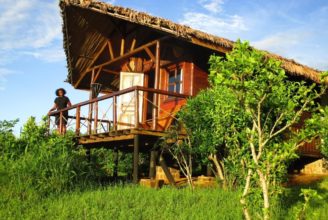
After breakfast you will travel to northern city of Diego Suarez. (Flight time 1:20-1:45 hrs.) Upon arrival in Diego you will be transferred to your hotel in Amber Mountain National Park in Joffreville. Travel time will be approximately an hour.
Rest of the day at leisure.
Note: The most efficient way to reach the far north is via a domestic flight from Antananarivo to Diego Suarez (Antsiranana), skipping the multi-day overland journey.
- Board Includes:
- Breakfast
- Dinner
See more about day 6
Day 7 – Trekking Amber Mountain: What Rare Species Live in the Volcanic Rainforest?
Today you will explore the Amber Mountain National Park with a specialist park guide. Amber Mountain is also known as Montagne d’Ambre and it is massif montane rainforest that rises from the surrounding dry region forming an isolated stretch of forest covering an area of 18, 200 hectares and lying at altitudes between 800 and 1.470 meters. The Amber Mountain National Park is home to 25 species of mammals, among them 6 carnivores such as the ring-tailed mongoose and the fossa, and 8 lemurs: Sanford’s brown lemur, crowned lemur, lesser bamboo lemur and are five species of nocturnal lemurs. Besides these forests are the home of 75 different bird species (35 of which are endemic and even locally endemic, like the Amber Mountainrock-thrush ), 60 reptiles, such as tiny stump-tailed chameleons, Brookesia ((Brookesia micra) the smallest chameleon in the world, leaf-tailed geckos and snakes, 35 frogs and more than 40 butterflies. The rich luxurious flora and fauna created unique three ecosystems (montane rainforest, mid-altitude rainforest and dry deciduous forests) give shelter to more than one thousand different plants.
You will have a guided walk with a local park guide to explore this great biodiversity sanctuary abundant of endemic fauna and flora, luxuriant vegetation, many waterfalls and volcanic lakes which honeycomb the area. The climate is perfect with cool air refreshes after the heat of the lowlands. The dominant ethnic groups are the Sakavala and the Antankarana. (Picnic lunch included).
- Board Includes:
- Breakfast
- Lunch
- Dinner
See more about day 7
Day 8 – The Red Tsingy Discovery: How Does the Unique Tsingy Rouge Form
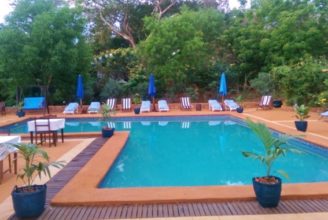
Today after breakfast you will travel to Ankarana National Park en-route visiting the Red Tsingy.
Red Tsingy is a miracle of nature in many ways to understand geology and erosion. The Red Tsingy is made of red laterite similar to clay and not of limestone rock like the Tsingy at Ankarana or Bemaraha. They are caused by heavy rain which is regular in these parts of Madagascar as well as the wind. As a result of erosion caused by the rain, wind and soft soil these imaginary and ravine of sharp, ancient rock formations unique to Madagascar. These turned out to be sand formations overlaid by red clay long ago. Erosion has worn the clay away, exposing the tall white (with tinges of red) columns of sand formations underneath. For those who’ve been to Bryce Canyon National Park, it’s some ways similar as both of them formed by erosion. This fragile nature’s gift can disappear quickly. Please do not touch them.
Afterwards continue your journey to Ankarana National Park. Travel time 3-4 hours.
Note: We will visit both the Tsingy Rouge (red laterite sand formations) and the Grey Tsingy of Ankarana (sharp limestone pinnacles). While they share a name, their geology is completely different—one is shaped by rain erosion, the other by tectonic uplift and millions of years of water carving.
Aleem’s Expert Tip: > “The Red Tsingy is actually quite young compared to the grey limestone—it was only revealed by erosion in the last few decades. The best time to photograph this is between 3:00 PM and 4:30 PM, when the setting sun turns the needles a deep, glowing crimson. It’s a photographer’s dream, but remember, they are very fragile clay—no touching!”
- Board Includes:
- Breakfast
- Lunch
- Dinner
See more about day 8
Day 9 – Entering Ankarana: What Makes the Limestone Pinnacles a Geological Marvel?
Today you will discover the Ankarana National Park for a half day or full day hike depending on your fitness level. Ankarana National Park is an eroded limestone massif fortress with sharp ridges known as Tsingy. The forest is covered with patches of tropical jungle taking you through deep caves, deciduous forests and canyons. These canyons and caves are the biggest underground network of Africa and rushing with rivers.
The Ankarana Reserve covers an area of 182,5 km² with spectacular views of karst topography.
The reserve contains one of the highest densities of primates of any forest in the world. Its dense forests support one of the largest and least disturbed populations of crowned lemurs. Sanford’s brown lemur, perrier’s black lemur, northern sportive lemur and dwarf lemurs, ring-tailed mongoose, fossa, tenrecs and Madagascar striped civet are also a common sight. Almost 100 bird species, 50 reptiles (including some endemic and threatened snakes and geckos) and 10 frogs cohabit in the Park. Inside the spectacular and huge labyrinth of caves 14 bat species, local endemic blind shrimps and the world’s only known cave-living crocodiles live.
- Board Includes:
- Breakfast
- Lunch
- Dinner
See more about day 9
Day 10 – From Ankarana to Nosy Komba: Why is the Sambirano Valley Famous for Spices?
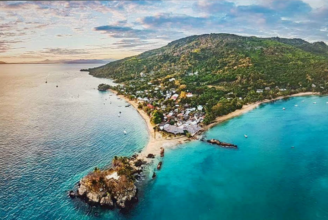
You will travel to the coastal port of Ankify, the gateway to the islands. From here, a private boat will whisk you away to the tranquil shores of Nosy Komba. Travel time approximately 4-5 hours. En-route you will visit a spice plantation to discover the spices including Madagascar Vanilla. The Vanilla orchid was introduced to Madagascar in the 19th century and has been a cornerstone of the Sava and Diana regions for over 100 years. Although the plant originally comes from Central America, Madagascar is the biggest exporter of Vanilla worldwide today. You may wish to buy some to take home.
From Ankify you will be transferred to Nosy Komba by boat.
From the port of Ankify, you will be transferred to Nosy Komba (the ‘Lemur Island’) by a private boat. This scenic 20-minute crossing takes you across the turquoise waters of the Sambirano Estuary.The Sambirano Valley is world-renowned for its organic spices and cocoa because its unique volcanic soil and humid microclimate provide the perfect conditions for Madagascar’s finest vanilla and Ylang-Ylang plantations.
Aleem’s Expert Note:
“The drive through the Sambirano Valley is a sensory experience. As you approach Ankify, the air actually changes—you’ll smell the sweet, heavy scent of Ylang-Ylang blossoms. It’s one of my favorite stretches of road in the North because it represents the transition from the dry limestone ‘Tsingy’ to the tropical ‘Perfumed Isles’
Aleem’s Expert Note: We intentionally time our departure from Ankarana to reach Ankify by mid-morning. In Northern Madagascar, the Varatraza (strong afternoon trade winds) typically pick up after 2:00 PM, which can make the sea choppy. By crossing early, we ensure a smooth, comfortable boat ride, getting you to your lodge in time for a fresh seafood lunch on the beach.
- Board Includes:
- Breakfast
- Dinner
See more about day 10
Day 11 – Exploring Nosy Komba: Why is it Known as the “Island of Lemurs”?
Full days at leisure or explore nearby islands. Diving or snorkelling can be arranged with the hotel to explore the unique biodiversity of the island. Nosy Komba is famously known as the ‘Island of Lemurs’ because its lush volcanic slopes are home to a thriving population of habituated Black Lemurs that frequently interact with visitors in the forest canopy.
- Board Includes:
- Breakfast
- Dinner
See more about day 11
Day 12 – Exploring Nosy Sakatia: How Can You Ethically Observe Giant Sea Turtles?
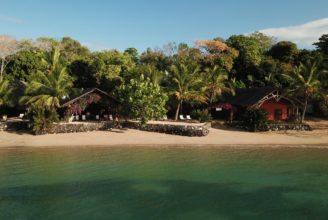
Discover the unspoiled Island of Nosy Sakatia surrounded by blue azure water and sandy golden beaches.
Full days at leisure or explore nearby islands. Diving or snorkelling can be arranged with the hotel to explore the unique biodiversity of the Island.
At Nosy Sakatia, we practice strict passive observation in a protected marine sanctuary, allowing you to snorkel alongside giant green sea turtles as they graze naturally in their seagrass habitat.
At Earth Trip, we follow a strict ‘No Touch, No Feed’ policy. Our local Sakatia guides are trained to maintain a respectful distance (minimum 3 meters) to ensure the turtles remain undisturbed. This allows for a more authentic encounter where you can watch these ancient creatures’ natural behaviors in crystal-clear water.
- Board Includes:
- Breakfast
- Dinner
See more about day 12
Day 13 – The Nosy Iranja Sandbar: Is This the Most Beautiful Beach in the World?
Today is dedicated to exploring the two islets of Nosy Iranja: Iranja Be and Iranja Kely. While the turquoise waters are perfect for a swim in the ‘natural aquarium,’ a walk to the island’s highest point reveals its most famous landmark.
Here, you will find the historic Giffard Lighthouse, a striking iron structure designed by the firm of Gustave Eiffel in 1909. Standing at the top offers a breathtaking 360-degree panoramic view of the sandbar and the vast Indian Ocean. As you descend back to the beach, you may spot the nesting sites of the Hawksbill and Green Sea Turtles that give the island its nickname. We ensure a quiet, respectful visit to these nesting areas, supporting local conservation efforts while you enjoy a traditional seafood lunch under the shade of the palms.
- Board Includes:
- Breakfast
- Dinner
See more about day 13
Day 14 &15 – Relaxing on Nosy Be: What is the ‘Mora Mora’ Lifestyle on Ambatoloaka Beach?
Today you will travel to Nose-be. Your journey continues with a short, 10-minute private boat crossing from the peaceful shores of Sakatia Lodge. As you glide across the calm waters of the channel, you’ll arrive at the secluded beach of Chanty Beach on the western coast of Nosy Be.
From here, our driver will meet you for a brief 15-minute scenic drive through the ylang-ylang scented landscape to the vibrant coastal area of Ambatoloaka. Your new sanctuary is an extraordinary garden hotel where the forest meets the beach, offering a perfect blend of botanical beauty and the gentle lap of the lagoon.”
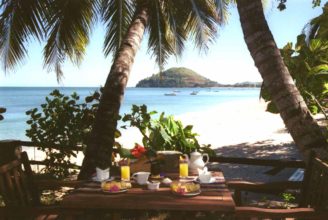
Relax on Nosy Be where your hotel is surrounded by an extraordinary garden on the beautiful beach of Ambatoloaka and its lagoon. The ‘Mora Mora’ lifestyle is the Malagasy philosophy of ‘slowly-slowly,’ best experienced while relaxing on the golden sands of Ambatoloaka Beach, where the turquoise lagoon meets lush, tropical gardens.
- Board Includes:
- Breakfast
See more about days 14 & 15
Day 16 – Flying Back to Tana: Why Do We Build in a Buffer Day Before Your Flight?
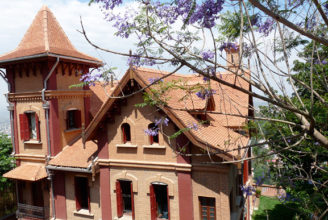
Today you will take a flight to Antananarivo. Flight time is approximately 01:30 hours. After a final breakfast overlooking the Ambatoloaka lagoon, a private transfer will take you to Fascene Airport (NOS) for your domestic flight back to the capital. Upon arrival in Antananarivo, our team will meet you at the airport and transfer you back to your boutique hotel in the Upper Town. This evening is yours to enjoy a final Malagasy dinner—perhaps trying the famous Romazava—while reflecting on your journey from the rainforests of Andasibe to the emerald waters of the North.
Flight Reliability Note: While we use Madagascar Airlines for internal legs, schedules can shift. We have built-in buffer time in Antananarivo before your international departure to ensure that any local delays do not impact your journey home.
- Board Includes:
- Breakfast
See more about day 16
Day 17 – Final Departure: How Do We Ensure a Stress-Free International Transfer?
Depending on your flight schedule, you may have time for a final visit to the Digue Market, Madagascar’s premier artisanal hub. Our driver will be on hand to help you navigate the stalls to find high-quality Malagasy silk, hand-carved wood, and world-class vanilla.
Because we monitor local traffic patterns and flight schedules in real-time, our team takes the stress out of your departure. We will ensure you reach the airport with a comfortable three-hour buffer, giving you ample time to check in, browse the curated airport galleries, and relax in the international lounge. Veloma—until your next adventure with Earth Trip!
- Board Includes:
- Breakfast
See more about day 17
-
Included:
- Private transportation in fully air conditioned vehicle
- Accommodation as per itinerary
- Admission fees to all mention attractions
- English speaking guide as per itinerary
- Meals as mentioned in the itinerary
- Airport meet & greet in all airports
Not Included:
- Gratuities for services and guides
- Expenses on personal nature
- Anything else not listed in the itinerary
- Optional excursions
- Personal & medical insurances
- Flights are not included in the tour price, but we are happy to help you find the best and most suitable flight connections for your trip.
FAQs tailored for your Northern Madagascar itinerary:
### 1. When is the best time to visit Northern Madagascar and Nosy Be?
The ideal time to visit is during the dry season, from May to October. For specific wildlife experiences, aim for August to October to see Humpback whales, or October to December for Whale Sharks in Nosy Be. While the North is tropical year-round, we recommend avoiding January to March due to high rainfall and potential cyclones.
### 2. What is the difference between the Red Tsingy and Ankarana Tsingy?
Though they share a name, they are geologically distinct. The Tsingy Rouge (Red Tsingy) is made of fragile laterite clay and sandstone, created by recent erosion. The Ankarana Tsingy is an ancient, razor-sharp limestone fortress formed over millions of years. This itinerary includes both to showcase Madagascar’s diverse geological history.
### 3. Are the road conditions in Northern Madagascar difficult?
The roads in the North (RN6) are known for being rugged and prone to potholes, particularly between Diego Suarez and Ankify. To ensure your comfort and safety, we provide private 4×4 vehicles with experienced local drivers. We also time our transfers to avoid driving after dark, prioritizing your security and photography opportunities.
### 4. What endemic wildlife can I see on a Northern Madagascar tour?
The North is a biodiversity hotspot. Key species include the Crowned Lemur and Sanford’s Brown Lemur, both endemic to this region. You may also spot the Panther Chameleon, the leaf-tailed gecko (Uroplatus), and in Amber Mountain, the Brookesia micra—one of the smallest chameleons on Earth.
Expert Insight from Aleem
“Northern Madagascar is the island’s best-kept secret. I’ve timed this route to ensure you cross to the islands in the morning, avoiding the choppy afternoon trade winds known as the Varatraza. In Ankarana, don’t miss the ‘Perte de Rivières’—it’s a geological marvel where five rivers vanish into a massive limestone hole, and it’s the true heartbeat of the north.”

Unsure Where To Start?
Connect with a specialist to craft your journey.


Our travel specialists are seasoned explorers with deep local insights. Whether it’s uncovering hidden gems or planning immersive cultural experiences, we design trips that go beyond the ordinary. Get in touch today!
Request A Video MeetingSpeak to our Madagascar travel expert today
Aleem Raheem
Aleem’s in-depth knowledge of Madagascar's hidden gems, cultural landmarks, and pristine beaches makes him the go-to guide for travellers seeking an authentic and unforgettable holiday.
 17-Day Northern Madagascar Tour & Island Hopping | Earth Trip 2027 & 2028