












Madagascar Wildlife Highlights Holiday: A Masterclass in Endemic Discovery
Experience the definitive 22-day expedition through Madagascar’s most iconic landscapes, a route personally vetted and curated by our lead specialist, Aleem, who has explored every trail and reserve on this circuit.
The Earth Trip Difference: “This isn’t just a tour; it’s an immersive deep-dive into the ‘Eighth Continent.’ Our 3 weeks discovery is meticulously designed to reveal the best birdwatching and lemur-spotting locations the island has to offer. With over half of Madagascar’s nearly 300 bird species being endemic, you will be in a holy grail for naturalists. From the towering Grand Tsingy to the haunting whale-like song of the Indri in the eastern rainforests, you will witness the island’s most famous inhabitants in their natural habitats.”
Private Exploration at Your Own Pace: “Traveling in a private 4×4 with your own dedicated chauffeur-guide, you have the ultimate flexibility to pause for a rare photograph of a Golden Bamboo Lemur or linger at the Avenue of the Baobabs as the sun sets. This itinerary connects the biodiversity-rich national parks of the South, West, and East, blending unique wildlife encounters with the fascinating history of 18 Malagasy tribes.”


The Best Time To Visit
April to November
The best time to visit Madagascar is from April to November, during the dry season, when wildlife viewing and outdoor activities are at their peak.
Enquire TodayRegions You’ll Visit
View mapMadagascar is raw and unpredictable, which is why first-hand knowledge is everything. I’ve personally checked the drive times and the quality of the guides in every park on this 21-day route to ensure you spend more time with the wildlife and less time in transit. If you’re a photographer, I recommend focusing on the Kirindy Reserve at night—it’s where I’ve had my best luck spotting the elusive Fossa!
Itinerary Highlights
This 3-week route is designed to provide the most comprehensive wildlife and landscape experience:
-
The West (Tsingy & Baobabs):
-
Tsingy de Bemaraha: A UNESCO World Heritage site featuring spectacular limestone karst pinnacles and canyons.
-
Avenue of the Baobabs: Sunset walk among these massive, ancient trees.
-
Kirindy Forest: The best location for tracking the Fossa (the island’s apex predator) and spotting the “dancing” Sifaka.
-
-
The South (RN7 Circuit):
-
Isalo National Park: Known as the “Grand Canyon of Madagascar,” featuring Jurassic sandstone landscapes and natural oases.
-
Ranomafana: Rainforest trekking for the Golden Bamboo Lemur and night walks for nocturnal species.
-
Anja Community Reserve: Famous for its high density of Ring-tailed Lemurs.
-
-
The East (Rainforests):
-
Andasibe-Mantadia: Home to the Indri, the largest living lemur, famous for its loud, haunting calls.
-
Practical Details
- Price: From £6,370 per person (based on two people sharing).
- Duration: 21 Days / 20 Nights.
- Transport: Private air-conditioned 4×4 vehicle with a dedicated specialist chauffeur-guide. This is vital for the rugged expedition to the West (Tsingy) and the long stretches of the RN7.
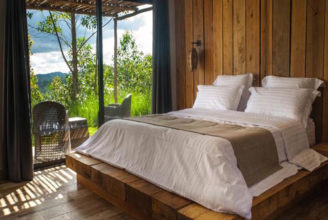
- Accommodation: A curated blend of Superior and Mid-range hotels, ranging from boutique mountain lodges in the rainforest to high-end desert camps in the South and historic hotels in the capital.
- Best Time to Visit: April to November (the dry season). This specific 3-week route is only possible during these months because the roads to the Tsingy de Bemaraha are seasonally closed due to rain from December to March.
Route Overview
-
Antananarivo: Arrival and stay in a quiet international standard hotel.
-
The West (Days 3-7): Flights to Morondava, deep-dive into Kirindy, Bekopaka, and the Big Tsingy.
-
The Highlands (Days 8-12): Visit Lake Tritriva and journey south to Ranomafana and the Ambalavao paper factory.
-
The Deep South (Days 13-16): Canyons of Isalo, the bird-rich Zombitse forest, and the spiny forests of Reniala.
-
The East (Days 17-21): Return to Tana then head east to Andasibe for rainforest exploration and the Indri.
Day 1 – Fly to Antananarivo
Today you will start your Madagascar adventure by flying to Antananarivo’s Ivato International Airport.
See more
Day 2 – Arrival → Antananarivo
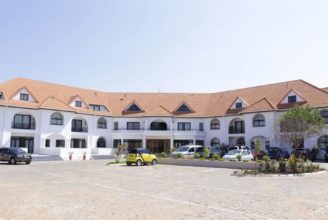
‘’Manao ahoana’’ & ‘’Salama’’ Welcome to tropical paradise. You will be welcomed & greeted by your guide or representative on arrival at Antananarivo Ivato International Airport. You will be transferred to your hotel in Antananarivo. The travel time will be approximately 10 minutes depending on the road traffic.

- Board Includes:
- Breakfast

See more
Day 3 – Fly to Morondava
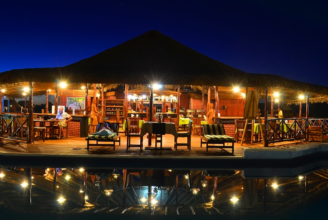
Today you will fly from Antananarivo to Morondava. Your flight time will be approximately 50 minutes. Upon arrival you will travel to Kirindy Reserve.
The west of Madagascar is known for its dry climate and deciduous forests as well as natural wonders. Morondava was the center of the once powerful Sakalava Kingdom and today is a thriving rice growing area.
Kirindy is situated 50 kilometres northeast of the town of Morondava, it is a privately managed forest by a Swiss NGO dedicated to selective and sustainable logging (Centre de Formation Professionelle Forestière). At Kirindy Reserve you will take a walk to spot the nocturnal wildlife around 6pm as it offers the best wildlife spotting experience including Giant jumping rat, lemurs, chameleons and Fossa. You will be back for dinner around 8pm.
- Board Includes:
- Breakfast
- Lunch
- Dinner
See more
Day 4 – Kirindy
Today you will do a day walk and night walk at Kirindy. Kirindy comprises of one of the most outstanding and threatened wildlife habitats in Madagascar: the dry deciduous forest, whose extension has been reduced to 3 percent of their original extent. Dominated by majestic baobab trees and a forest canopy of 14 m altitude, this protected area is the only place where the Malagasy Giant Jumping Rat occurs. This animal can hop like a miniature kangaroo but is also seen walking on all four limbs. It is also a sanctuary for the world’s smallest known primate, the Madame Berthe’s Mouse Lemur.
Kirindy Forest is the undisputed premier location in Madagascar for observing the island’s apex predator, the Fossa (Cryptoprocta ferox), in its natural dry deciduous habitat, especially during the mating time between October and December. It is also home to seven species of lemur. The most common are the common brown lemurs and the Verreaux’s sifakas. The remaining species are nocturnal: the rare Coquerel’s giant mouse lemur and pygmy mouse-lemur, fork-crowned lemur, Gray mouse lemur, western fattailed dwarf lemur and red-tailed sportive lemur. Several bats, tenrecs, mongooses and rodents complete the mammal population. 40 birds, 50 reptile and 15 amphibian species are also found in this magnificent forest.
Kirindy Forest is the undisputed premier location in Madagascar for observing the island’s apex predator, the Fossa (Cryptoprocta ferox), in its natural dry deciduous habitat
- Board Includes:
- Breakfast
- Lunch
- Dinner
See more
Day 5 – Kirindy → Bekopaka
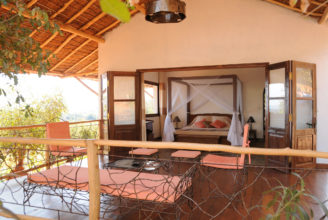
Today you will do a day walk at Kirindy. You will then travel to Bekopaka and en route you will try the best Malagasy food in Belo’s “Mad Zebu” Restaurant. Your total travel time to Bekopaka will be approximately 6-8 hours.
- Board Includes:
- Breakfast
- Lunch
- Dinner
See more
Day 6 – Big Tsingy
After an early breakfast you will be trekking the Tsingy Bemaraha National Park or Grand Tsingy. It is listed as a UNESCO World Heritage Site. This is one of the most spectacular natural landscapes in the world. An extensive area of limestone massif has been eroded into impressive karst pinnacles. This geological wonder is a monument of karst limestone that comprises karstic landscapes and limestone uplands cut into impressive ‘tsingy’ peaks and a ‘forest’ of limestone needles, the spectacular canyon of the Manambolo River, rolling hills and high peaks. The undisturbed forests, lakes and mangrove swamps are the habitat for rare and endangered lemurs.
You can trek the soft circuit with your guide. Tsingy Bemaraha is a treasure trove for nature lovers with a high rate of endemism and diversity. The scientists estimate that the general endemism of this park is nearly 90% and the ecoregional one is 47%. 11 species of lemurs can be found here including Deken’s Sifakas, red-fronted brown lemur, Cleese’s woolly lemur and more. Five families of bats and 103 species of birds can be spotted. The index of the reptiles and amphibians is as large, as Bemaraha possesses 34 species that are all endemic. These are just a first taste of what can be discovered on this unique island.
- Board Includes:
- Breakfast
- Lunch
- Dinner
See more
Day 7 – Baobab Avenue
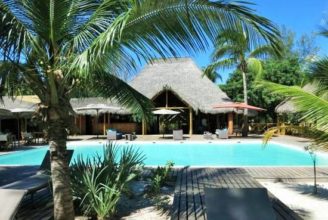
After breakfast you will travel to Belo en route to Morondava’s “Alley of Baobabs or Avenue of the Baobabs’’. We will have lunch in Belo and continue our journey to the avenue of Baobabs. Travel time will be approximately 8 hours.
“Alley of Baobabs or Avenue of the Baobabs’’ is one of the Madagascar’s picture post card images. Baobabs (Grandidiers) are usually solitary trees, standing tall and proud in the midst of empty spaces. Yet in Baobab Alley, they cluster together forming an avenue of columns that border the dirty road. The Baobabs are tall trees with its massive trucks, crooked branches and furry fruit. Baobabs have adapted to the dry and hostile environment. The secret of the baobab’s success in surviving in harsh environments and the reason for its massive trunk is that it has little wood fibre but a large water storage capacity. Each tree can hold up to 300 litres of water, enabling it to live through long periods without rain. The life-cycle of these unique natural oddities is as impressive as their bulk – most live over 500 years.
We will stop to see the sunset at the Avenue of the Baobabs.
- Board Includes:
- Breakfast
- Dinner
See more
Day 8 – Lake Tritrive
After breakfast you will travel to Miandrivazo along the scenic rural countryside road. After lunch in Miandrivazo you will continue along the scenic route to Antsirabe.
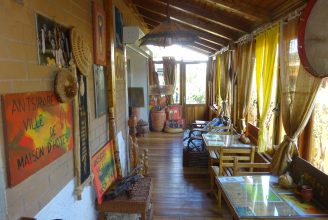
En route to Antsirabe you will be visiting the emerald green Lake Tritriva, one of two volcanic lakes with legendary tales. The water level drops in the rainy season and rises in the dry season. Debris from the lake can be found down in a valley below, supporting a theory of existing underground channels. Lake Tritriva is situated near the village of Betafo. It is a typical highland village with red houses with red tiled roofs.
- Board Includes:
- Breakfast
- Dinner
See more
Day 9 – Antsirabe → Ranomafana
After breakfast you will travel by car to Ranomafana National Park. The travel time will be approximately 7-8 hours.
Antsirabe is the third largest city in Madagascar situated in the high altitude (about 1 500 m). The cool temperatures are in the high altitude the reason why the Norwegian Missionaries chose this city in 1872. Antsirabe is the home of one of the award winning beers in Madagascar THB (Three Horses Beer). Its name means “where there is salt” honouring the large number of hot springs the town has, a fact that has given the city the nickname of “Malagasy Vichy”. The thermal baths had been long appreciated for their curative effects by the local population when French colonists decided to locate a thermal bath here in the 19th century.
This compact city centre with its nice mixed architecture of different styles invite visitors for a walk. In the European district French cottage-style houses are built next to Scandinavian villas with English style gardens. The tree-lined avenues always give some freshness whenever the sun is too bright. You will enjoy an afternoon pousse-pousse rickshaw tour of the city. It is the best way to see this beautiful city.
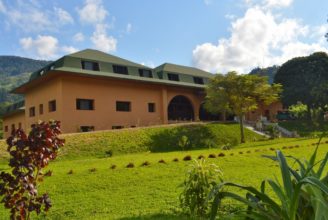
Ranomafana is a mid-altitude rainforest and spreads over 41,601 hectares. Ranomafana offers skilled nature guides and are great help in finding elusive bird species. Ranomafana National Park’s success is because of one woman’s vision and dedication to preserve the nature and wildlife. Dr. Patricia Wright is considered to be one of the world’s foremost experts on lemurs, Wright is best known for her 26-year study of social and family interactions of wild lemurs in Ranomafana National Park, Madagascar.
When it gets dark you will take a night walk with a guide to observe the nocturnal lemurs (active only during night time).

- Board Includes:
- Breakfast
- Dinner
See more
Day 10 – Ranomafana National Park
After breakfast you will explore this wonderful rainforest. Ranomafana is a conservation success story in many ways. Today Ranomafana plays a crucial role in education and scientific research with the help of Centre ValBio Research Centre which is one of the most sophisticated research field stations in Madagascar.
There are many different forest types, from lowland rainforests to cloud forests and high plateau forests. It was classified a World Natural Heritage site of Atsinanana in 2007. It shelters a big wealth of endemic biodiversity with challenges. The forest marshes are home to Madagascar Snipe, Slender-billed Flufftail and Grey Emutail. You can see the rare species and seriously threatened lemurs. The park is also the genetic reservoir of some rare and endemic plant species. There are many rivers and streams passing through the forest. Several animal species have been recorded, 12 species of lemurs, including golden bamboo lemur, greater bamboo lemur, Milne-Edward’s sifaka, red bellied lemur plus 115 species of birds. About thirty amongst them exist exclusively in the primary forest of the park. There are also 90 species of butterflies, 98 species of amphibian and 62 species of reptiles; chameleons, lizards and fish.
Your specialist park guide will explain to you the circuits available to you before based on your fitness, expectation and the circuits. The shortest trek, Circuit Varibolomena, takes about 2-3 hours. This soft circuit is about 3 kilometres long but there are also medium to hard circuits to choose from.
During the evening there will be lectures about conservation in the ValBio Centre. You can also visit the centre during the opening hours. When it gets dark you will take a night walk with a guide to observe the nocturnal lemurs (active only during night time).

- Board Includes:
- Breakfast
- Dinner
See more
Day 11 – Kianjavato Forest Lemur Project & Night walk
In the morning you will visit Kianjavato Forest Lemur Project is located close to Ranomafana rainforest. The Madagascar Biodiversity Partnership is a Malagasy NO founded and piloted by Dr. Edward Louis Jr., Director of the Conservation Genetics Department at OHDZA in Omaha, Nebraska. Together they work to protect and restore Madagascar’s remaining forests such as Kianjavato and the diverse wildlife. The surrounding forest fragments are home to nine lemur species, including the elusive and nocturnal Aye-aye, and two critically endangered lemur species, the Black and white ruffed lemur and the Greater bamboo lemur, both of which are listed among the 25 most endangered primates in the world due to habitat loss and hunting.
When it gets dark you will take a night walk back at Ranomafana with a guide to observe the nocturnal lemurs (active only during night time) and wildlife.
- Board Includes:
- Breakfast
- Dinner
See more
Day 12 – Ranomafana → Ambalavao
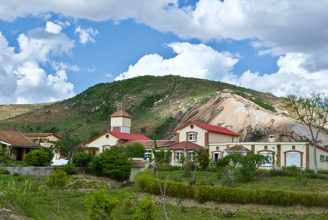
After breakfast you will travel to Ambalavao which will take approximately 2 ½ – 3 hours. You will enjoy a short tour to explore this beautiful town. Ambalavao is a fascinating little town in the central highlands south of Fianarantsoa. The town is known for its paper-making, silk making and wines. The striking feature of this town is the architecture because of the old town houses with wooden balconies. From the centre of the market you can get a good view of the town houses and the church. Ambalavao is famous for Antaimoro paper-making and you can visit the paper factory. You can interact with the workers and try your own decoration with inlayed flowers, leaves and petals. From simple decorative paper, it is turned into postcards, wall hangings, gift bags, lampshades and many more items. This town is the centre for Zebu (Malagasy horned cattle) trading for all the surrounding countryside. Many tribes bring their herds of cattle here to the weekly Zebu market (every Wednesday).
- Board Includes:
- Breakfast
- Dinner
See more about day 13
Day 13 – Ambalavao → Isalo via Anja Community Reserve: A Model for Sustainable Tourism
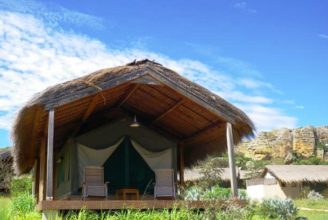
After breakfast you will travel to Anja, en route to Isalo in the south. The South of Madagascar is known for its spiny forests and cactus trees with colourful tribes. The South is home to some of the most popular parks in Madagascar including Isalo National Park. Anja Community Reserve nicknamed “Anja Park” is a great place to see ring-tailed lemurs in troops. It is the most visited community-run protected area for the lemurs and the landscape is incredible with the backdrop of granite rocks. Located at the foot of massive granite domes, the Anja Community Reserve is a world-class example of how local communities can lead the way in wildlife conservation and poverty reduction.
You will take a 2 hour walk around the 30-hectare reserve to see the ring-tailed lemur families and varieties of flora. You can also see some Bestsileo tombs here.
Afterwards you will continue your journey towards Isalo.
Arrive in Isalo National Park late afternoon.
- Board Includes:
- Breakfast
- Dinner
See more
Day 14 – Isalo National Park
Today you will explore Isalo National Park with your park guide. It is the Grand Canyon of Madagascar. Kingdom of the Queen of Isalo, cradle of a particular wild nature and an exceptional landscape, the lovers of the big escapes will be seduced by this park. The appeal is the remarkable landscape of the Jurassic Era eroded ruiniform sandstone, canyons and rare plants as well as the wildlife.
The highlights of the trekking circuits include the natural swimming pool and the canyons. The soft trekking circuit of Isalo covers approximately 3 kms in 3-4 hours. There are several circuits and you can talk to the guide for the best option that suits your expectations and fitness. Most hiking circuits include the natural swimming pool. It’s really worth a dip in the natural swimming pool as it’s an oasis.
These are around 80 species of birds living in Isalo among which the Benson’s rock-thrush (pseudocossyphus bensoni), an endemic species of Madagascar is well protected. You can also find 14 species of nocturnal lemurs, as well as ring-tailed, Verreaux’s Shifakas and red-fronted brown lemurs.
In the late afternoon, you will visit the Window of Isalo to see the sunset for a spectacular view.

- Board Includes:
- Breakfast
- Dinner
See more
Day 15 – Isalo National Park → Tulear via Zombitse National Park and Arboretum d’Antsokay
After breakfast you will travel to Ifaty, en route you will visit the Zombitse National Park. The total travel time will be approximately 4 ½ hours.
The complex, Zombitse Vohibasia, is in the southwest of Madagascar. Zombitse Vohibasia is renowned for its wealth of rare bird species and its unique biodiversity. This is now a protected park.
Zombitse Vohibasia shelters 47% of the endemic birds of Madagascar and a local endemic species: the Appert’s Greenbul (Bernieria apperti) . It also counts 8 species of lemurs, of which some are almost threatened, such as the western fork-marked lemur (Phaner furcifer pallescens).
In Zombitse, you will do a soft circuit trek for 2 kms which takes about 1-2 hours depending on your interests.
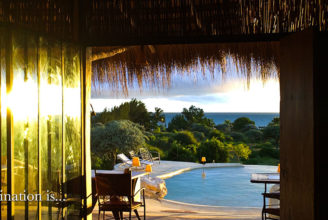
After the park visit you will continue your journey to Tulear via the Arboretum d’Antsokay.Situated 13 kilometres from Tulear along the Southwest coast is the impressive Arboretum d’Antsokay. Nature lovers will enjoy learning about the dry forest flora and fauna and it’s a great location for birdwatching.

- Board Includes:
- Breakfast
- Dinner
See more
Day 16 – Reniala and Reef Doctor Honko Project
After an early breakfast you will travel approximately 10 minutes to visit the Reniala Reserve, also known as Domergue reserve. It is an outstanding forest extending over 60 hectares, and is mainly composed of baobabs and thorny trees. Today, the reserve is a protected area where you will discover species of Madagascar’s Spiny forest. The forest possesses amazing flora and fauna. It contains more than 1000 botanical species which have a remarkable floral quality as they have adapted to a dry climate. It has a rich endemic fauna with numerous bird species. Reniala Reserve is a paradise for birders, who can easily observe some very rare endemic species, such as the long-tailed ground roller, the subdesert mesite, the red-capped coua or the blue vanga. There are 65 bird species in total within the reserve. Passionate ornithologists will surely enjoy visiting this park! Alongside birds, you will also find tortoises, reptiles, snakes and microcubes, that will delight all fauna enthusiasts.
During your tour of the Reef Doctor Honko Project (Mangrove Conservation Project) you can learn about the project that is helping to protect mangroves and its ecosystems. You can walk on the elevated boardwalk to observe nature. The trained local guides can show you many wonders and explain how this unique ecosystem works as well as how local people truly depend on nature for their survival. There are many wetland bird species found here, including several threatened and endangered species. In fact, a study found that Ambondrolava (where the site is located) has the highest recorded wetland bird diversity in Madagascar’s south and southwest region. Even since that study, new species have been sighted here, including the endangered Humblot’s Heron.
- Board Includes:
- Breakfast
- Dinner
See more
Day 17 – Fly to Antananarivo from Tulear
In the morning you will travel to Tulear Airport. Travel time approximately 45 minutes – 1 hour. You will fly to Antananarivo. Flight time will be one hour. You will be picked up from the airport and transferred to your hotel. Approximate travel time to your hotel will be 45 minutes – 1 hour depending on the traffic.

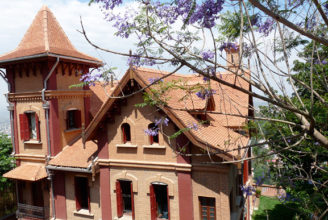
You will explore the city in the upper town (“La Haute ville”), where you can find Palaces (the Queen’s Palace, the ancient Prime Minister Rainilaiarivony Palace and the ancient Justice Palace), cathedrals and the residential area of (mostly) ancient noblemen families. From here, visitors enjoy a pleasant perspective of the city below far away from the bustling downtown. This is a great place to purchase souvenirs.
In the evening, witness the best sunset with Sundowner drinks at Lokanga. It is the best place to say “cheers” to a great trip around Madagascar with a glass of wine, a beautiful view of Antananarivo and to look back at the great memories you have made.
- Board Includes:
- Breakfast
- Dinner
See more
Day 18 – Antananarivo → Andasibe
After breakfast you will travel to Andasibe in the East of Madagascar.
As the roads winds through the hairpin bends and turns you have opportunities to observe the daily activities of remote villages along this road. You will be passing terrace rice fields and bustling road side stalls with all the tropical fruits.
Travel time will be approximately 3 hours depending on the road traffic.
In the evening around 6pm you will be guided through the Analamazaotra Park on a Night Walk to spot the nocturnal animals including the ‘Goodman Mouse lemur. Experience the rainforest after dark where nocturnal lemurs, chameleons, geckos, frogs and fireflies come alive. The night walk can take 1½ – 2 hours.
- Board Includes:
- Breakfast
- Dinner
See more
Day 19 – Andasibe
After breakfast you will visit the Analamazaotra Special Reserve (Périnet) in Andasibe-Mantadia National Park to spot and hear the sounds of the Indri Lemurs. The Indri is the largest living lemur and known as babakotos in the local Malagasy language, which means ‘man of the forest’ or ‘little father’ and unlike other lemurs, they only have a short stumpy tail. Indri’s produce loud territorial calls that can be heard from over 1km away as you enter the park.
You will be trekking through beautiful waterfalls and landscape that will lead you towards a natural swimming pool with a cascading waterfall. Bathing is allowed so bring your swimsuits. Along the track there is an exceptional rainforest ambiance where you can generally hear the screams of the Indri and see some beautiful orchids. There many circuits to choose from depending on your fitness level. The easiest trekking with well paved paths can take from 2-3 hours with a distance of up to 3 kilometres.
- Board Includes:
- Breakfast
- Dinner
See more
Day 20 – Andasibe → Antananarivo
Enjoy a short walk at Andasibe-Mantadia National Park where there are many circuits to choose from depending on your fitness level.
You will then travel to Antananarivo. As the roads winds through the hairpin bends and turns you have opportunities to observe the daily activities of remote villages along this road. You will be passing terrace rice fields and bustling road side stalls with all the tropical fruits.
Travel time approximately 3 hours depending on the road traffic.
- Board Includes:
- Breakfast
- Dinner
See more
Day 21 – End of Tour
Today you will be transferred to the airport for your flight back home. The travel time from your hotel is approximately 10 minutes depending on the traffic.
- Board Includes:
- Breakfast
See more
-
Included:
- Private transportation in fully air conditioned vehicle
- Accommodation as per itinerary
- Admission fees to all mention attractions
- English speaking guide as per itinerary
- Meals as mentioned in the itinerary
- Airport meet & greet in all airports
Not Included:
- Gratuities for services and guides
- Expenses on personal nature
- Anything else not listed in the itinerary
- Optional excursions
- Personal & medical insurances
- Flights are not included in the tour price, but we are happy to help you find the best and most suitable flight connections for your trip.
FAQ
1. What is the best time of year for this 22-day Madagascar discovery? The best time is between May and October (the dry season). This ensures the roads to the Grand Tsingy are open and the weather is perfect for trekking in Isalo and the Highlands.
2. Can I see the ‘Dancing’ Sifakas on this route? Yes. We specifically visit the Kirindy Forest (Day 12) and the forests near the RN7 south, which are the best habitats to spot the Verreaux’s Sifaka in the wild.
3. Is the Grand Tsingy trek suitable for everyone? The Grand Tsingy requires a moderate level of fitness. We use harnesses and fixed cables for safety as you navigate the limestone pinnacles. For those preferring something easier, the Petit Tsingy offers equally stunning views with less physical demand.
4. Why does this itinerary include the Anja Community Reserve? Anja is a highlight because it offers the highest density of Ring-tailed Lemurs in Madagascar. It is also a model for community-led conservation, where your visit directly supports local schools and forest protection.

Unsure Where To Start?
Connect with a specialist to craft your journey.


Each specialist has travelled extensively in the countries they plan. Whether it’s uncovering hidden gems or planning immersive cultural experiences, we design trips that go beyond the ordinary. Get in touch today!
Request A Video MeetingSpeak to our Madagascar travel expert today
Aleem Raheem, Co-Founder and Sustainable Travel Expert | Earth Trip
Speak to our Madagascar travel expert today
Aleem Raheem, Co-Founder and Sustainable Travel Expert | Earth Trip
 Madagascar Classic Holiday – 3 weeks – Baobabs, Tsingy, Lemurs 2027 & 2028