









Speak to our travel expert today

Country Facts
Capital
Tunis
Size
163,610km²
Time Zone
UTC+1(CET)
Population
11.9 million
Currency
Tunisian Dinar TND
Flight time (from UK)
3 hours
Your Guide to Travelling in Tunisia
Tunisia is a fascinating blend of ancient history, Mediterranean coastlines, desert landscapes and vibrant local culture.
From the ruins of Carthage and the Roman amphitheatre at El Jem to the medinas of Tunis and Kairouan, the mountain villages of the south and the vast Sahara, Tunisia offers far more than a traditional beach holiday.
Our Tunisia Travel Guide covers the best places to visit, things to do, when to travel and practical information to help you plan your journey.
When you’re ready to start planning, explore our tailor-made Tunisia holidays or speak to Genevieve Hall, our Tunisia travel specialist.
Why Visit Tunisia?
Tunisia is a wonderfully varied country that combines Mediterranean landscapes with thousands of years of history.
You can explore ancient Roman cities in the morning, enjoy lunch in a traditional medina and be walking through the Sahara by the following day.
The country is particularly rewarding for travellers interested in archaeology, culture, food, crafts and authentic local experiences.
Best Places to Visit in Tunisia
Tunis
Tunisia’s capital is the natural starting point for many journeys.
Explore the UNESCO-listed medina, browse traditional souks and discover the city’s historic palaces, mosques and markets.
Tunis also provides an excellent base for exploring Carthage and Sidi Bou Said.
Carthage
The ancient city of Carthage is one of Tunisia’s most important archaeological sites.
Once one of the great powers of the ancient Mediterranean, its ruins overlook the sea and provide a fascinating introduction to Tunisia’s history.
Sidi Bou Said
With its whitewashed buildings, blue doors and Mediterranean views, Sidi Bou Said is one of Tunisia’s most recognisable towns.
Its cafés, narrow streets and relaxed atmosphere make it an easy addition to a visit to Tunis and Carthage.
Dougga
Set among rolling countryside, Dougga is one of the best-preserved Roman cities in North Africa.
The impressive theatre, temples, Capitol and ancient streets make it one of the country’s essential archaeological experiences.
El Jem
The enormous Roman amphitheatre at El Jem is one of Tunisia’s most spectacular sights.
Its scale and state of preservation offer an extraordinary glimpse into Roman North Africa.
Kairouan
Kairouan is one of the most important historic cities in the Islamic world.
Explore its medina, traditional architecture and the Great Mosque while discovering the city’s distinctive crafts and food traditions.
The Sahara
Southern Tunisia opens into a completely different landscape.
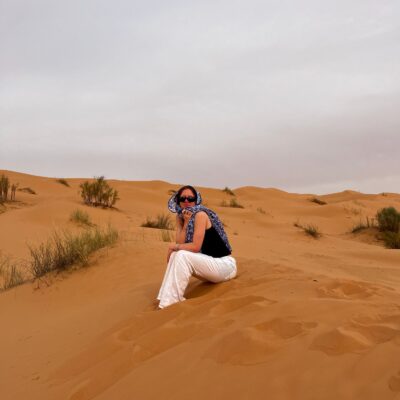
Travel through desert villages and oasis towns, explore the dunes by 4×4 and spend a night beneath the stars in a desert camp.
Matmata and the Dahar Mountains
The south is also home to distinctive Amazigh and Berber heritage, including traditional troglodyte homes and ancient ksour.
Matmata, Douiret, Chenini and Guermessa offer an insight into a very different side of Tunisia.
Hammamet
For travellers wanting time beside the Mediterranean, Hammamet offers sandy beaches, a historic medina and a relaxed coastal atmosphere.
It can be an ideal place to finish a cultural or desert journey.
Things to Do in Tunisia
Tunisia offers a surprisingly broad range of experiences.
Some possibilities include:
Explore the medina of Tunis
Visit ancient Carthage
Wander through the blue and white streets of Sidi Bou Said
Discover the Roman ruins of Dougga
Visit the amphitheatre at El Jem
Explore the historic city of Kairouan
Experience the Sahara by 4×4
Spend a night in a desert camp
Discover traditional Amazigh villages
Explore the troglodyte homes of Matmata
Learn to make traditional Tunisian food
Discover local pottery and crafts
Taste Tunisian olive oil and harissa
Relax on the Mediterranean coast
For inspiration, take a look at Timeless Tunisia or our Tunisia Cultural Trail.
Both journeys can be adapted to create your own tailor-made experience.
Reasons to visit Tunisia:
The history:
Few countries layer history quite like Tunisia. You can wander the ruins of Carthage, explore the world‑class Roman amphitheatre of El Jem, and step into centuries‑old medinas where Punic, Arab, Ottoman, and French influences blend into something uniquely Tunisian.
The beaches:
Tunisia’s coastline stretches for over 1,000 km, offering everything from quiet coves to lively resort towns. Places like Djerba, Hergla, and Hammamet serve up warm seas, soft sand, and that slow, sun‑drenched Mediterranean vibe.
The desert:
The Tunisian Sahara encompasses a wide range of desert environments, from extensive dune fields to large salt lakes and long‑established oasis settlements. The region also contains traditional Berber cave dwellings and several internationally recognised film locations, offering visitors a desert landscape that is both diverse and accessible.
The people:
Tunisian people are widely known for their hospitality, a tradition rooted in Berber, Arab, and Mediterranean cultures. Visitors are often welcomed with genuine warmth, whether in bustling medinas, rural villages, or coastal towns. From sharing mint tea to offering directions or local tips, Tunisians take pride in making guests feel safe, comfortable, and at home.
One of Tunisia’s greatest charms is how effortless it is to explore. In just a single day, you can journey from the golden dunes of the Sahara to ancient Roman ruins and then unwind in a seaside town. Each place feels completely different, yet together they reveal the country’s incredible variety and character.
Preparing For A Trip To Tunisia?
Visa and Flights
Tunisia is visa free for UK citizens for up to 90 days. Please make sure your passport is valid for the duration of your stay.
Direct flights from the UK run nearly everyday from London Heathrow and London Gatwick, with numbers increasing during peak season. Direct flights to Tunis take around 3 hours, depending on the airport.
Passport validity requirements
To enter Tunisia, your passport must have an ‘expiry date’ at least 3 months after the date you arrive. You will also need proof of your return/onward ticket.
You will be denied entry if you do not have a valid travel document or try to use a passport that has been reported lost or stolen.
Make sure the border official stamps your passport.
Show More
Health
No special vaccines are required for most travellers. The FCDO recommends being up to date with routine vaccinations and boosters as recommended in the UK. It is also worth getting travel insurance that covers health and medical emergencies. Please check the latest vaccine recommendations for Tunisia 8 weeks before your trip.
Emergency number: 190 and ask for an ambulance.
There are plenty of pharmacies across the urban parts of Tunisia. Please bring any necessary prescription medication with you.
Show More
When Is the Best Time to Visit Tunisia?
Tunisia can be visited throughout much of the year, but the best time depends on the regions and experiences you want to include.
Spring: March to May
Spring is an excellent time for exploring Tunisia’s archaeological sites, cities and countryside.
Temperatures are generally comfortable, making it a good period for touring and walking.
Summer: June to August
Summer is ideal for a Mediterranean beach holiday, although temperatures can become very high inland and in the desert.
If you’re planning an extensive desert journey, the cooler months are generally more comfortable.
Autumn: September to November
Autumn is another excellent period for exploring Tunisia.
The heat of summer begins to ease, while the Mediterranean remains attractive for coastal stays.
Winter: December to February
Winter offers mild conditions in many coastal and northern areas, although desert nights can be cold.
It can be a particularly good time for travellers more interested in culture, archaeology and the south.
Genevieve can advise you on the best time to travel based on your itinerary.
So the best time to visit…
Overall, we would recommend travelling in March to May and September to November, as it provides perfect conditions for exploring Tunisia!
Show More
Travel advice from someone who has been:
What they say is true – it does get very cold in the night in the desert! I’d recommend bringing a few extra layers as a fleece only just cut it!
Take cash out at the airport! A lot of places outside of Tunis and cities do not have card machines, especially local craftsmen and women. The Tunisian Dinar is a closed currency, so be sure to spend it all before leaving!
If you can brave the early mornings, sunrise in the Sahara is sensational. You may be tired later in the day but you won’t regret it, trust me!
Expect a lot of sweet mint tea! Tunisia prides itself on welcoming hospitality, and rightly so! They treat you as a friend, rather than a tourist, and one way of showing this is the national delicacy of tea!
Local produce > chain restaurants: the food in Tunisia is divine, and plentiful. Expect multiple courses of some of the best food you’ll ever eat! From fresh fish, traditional couscous, Djerbian rice, and enough olive oil and harissa to last you a lifetime (and you still won’t get sick of it).
For packing, aside from the obvious, I’d recommend bringing a light scarf and airy but modest clothes which will be needed in the more rural areas and when visiting mosques. It’s the traditional and respectful way of dressing, and a good way to keep the sun off.
When you’re choosing souvenirs, picking something local is a lovely way to go! Many pieces are made using traditional techniques passed down through generations, and supporting these artisans helps keep those skills alive. They are also very unique, not something you can find just anywhere.
And last of all, just really take it all in. Everything about Tunisia is extraordinary, from the landscapes, to the food, to the people. You’ll return home amazed by how special Tunisia is, and how few people realise it!
How Long Do You Need in Tunisia?
For a first visit, 10–14 days gives you enough time to experience several sides of the country without rushing.
A varied itinerary could include:
Tunis → Carthage → Sidi Bou Said → El Jem → Kairouan → Southern Tunisia → Sahara → Hammamet
With additional time, you can explore the north in greater depth, spend longer in the desert or add a relaxing Mediterranean stay.
Explore our Tunisia holidays for more inspiration.
Travelling Around Tunisia
Private transport is an excellent way to explore Tunisia.
It allows you to travel comfortably between the country’s archaeological sites, cities, mountains and desert while giving you the flexibility to stop at places of interest along the way.
We can also arrange local guides and private experiences, allowing you to discover Tunisia with people who know the country well.
Tunisian Food & Culture
Food is an important part of the Tunisian experience.
Couscous, brik, harissa, fresh seafood and locally produced olive oil all feature strongly in Tunisian cuisine.
For travellers who enjoy food, we can arrange experiences such as cooking classes, market visits, harissa workshops and olive oil tastings.
Traditional crafts are another important part of Tunisian culture. Pottery, carpets and other handmade products provide opportunities to meet local artisans and understand the traditions behind their work.
Is Tunisia Suitable for Families?
Yes. Tunisia can be an excellent family destination.
Families can combine historical sites and cultural experiences with beaches, desert adventures and comfortable hotels.
A tailor-made itinerary allows the pace and activities to be adjusted around the ages and interests of your children.
Is Tunisia Good for a Luxury Holiday?
Yes.
Tunisia has a growing selection of boutique hotels, beautifully restored traditional properties, luxury resorts and distinctive desert accommodation.
A luxury journey could combine private guides and transport with characterful accommodation, cultural experiences and a relaxing stay on the Mediterranean coast.
Explore our luxury holidays for more inspiration.
Tunisia Travel FAQs
Is Tunisia safe for tourists?
Tunisia is a popular destination for international travellers. As with any overseas journey, we recommend checking the latest UK Government travel advice for Tunisia before travelling.
Can I visit the Sahara in Tunisia?
Yes. The Tunisian Sahara can be included in a tailor-made journey, with opportunities to travel by 4×4, explore desert villages and spend a night at a desert camp.
Can I combine culture and a beach holiday in Tunisia?
Absolutely. Tunisia is particularly well suited to combining archaeological and cultural experiences with time on the Mediterranean coast.
Is Tunisia good for a honeymoon?
Yes. Couples can combine boutique hotels, private experiences, the Sahara and a relaxing stay beside the Mediterranean.
Do I need a private driver in Tunisia?
You don’t have to, but private transport is an excellent option for a tailor-made journey. It makes it easier to connect archaeological sites, cities, mountain villages and the desert.
How long should I spend in Tunisia?
Around 10–14 days works well for a first visit, although shorter or longer journeys can easily be arranged depending on your interests.
Can I experience traditional Tunisian food?
Yes. Food experiences can be built into your itinerary, including cooking classes, market visits, harissa workshops and olive oil tastings.
Meet Genevieve – Your Tunisia Travel Specialist
Personalised advice for your Tunisian journey
Genevieve Hall is Earth Trip’s Tunisia travel specialist, with a particular focus on creating journeys that combine Tunisia’s history, culture, landscapes and local experiences.
From exploring ancient Roman sites and traditional medinas to travelling through the Sahara and discovering Tunisia’s food and crafts, Genevieve can help you build a journey around the experiences that interest you most.
Earth Trip’s Tunisia journeys are tailor-made, so you can choose the pace, accommodation and experiences that suit you.
Speak to Genevieve about your Tunisia holiday
Start Planning Your Tunisia Journey
Tunisia is a destination that rewards travellers who look beyond the beaches.
Explore ancient civilisations, discover traditional communities, travel into the Sahara and experience the country’s Mediterranean culture at your own pace.
Take a look at our tailor-made Tunisia holidays or explore our Tunisia itineraries for inspiration.
Start planning your Tunisia holiday
020 8935 5685
info@earthtrip.co.uk
Tailor-Made Luxury Tours with a Private Driver
Earth Trip designs exclusive, bespoke tours featuring private drivers and hand-picked luxury accommodations, built entirely around your personal preferences and travel style.
Bespoke Holidays
 Tunisia Travel Guide